No title? No problem in most cases. Free towing, cash on the spot.
Published October 19, 2026 by Instant Money Junk Cars
A single accident entry on a Carfax report can move your offer by a meaningful amount, and sellers are right to feel anxious about it. When you go to sell a car with a Carfax accident on its record, nearly every professional buyer will see the entry before they price the vehicle, and the discount they apply reflects what the market pays for accident-history cars. Understanding how buyers read that entry is the first step to getting a fair number anyway.
This guide explains how accident history affects offers, why severity matters more than the mere existence of an entry, what documentation helps offset the discount, and whether pulling your own report first is worth it. Buyers who buy cars after accidents price these vehicles every day, and an honest description gets you the best number they can pay.
They read it as a risk marker first and a detail second. The entry tells the buyer the car was in a reported incident, and then they look for severity signals: airbag deployment, structural or frame damage, the number of incidents, and how recently they occurred. A bumper repaint ten years ago reads very differently from airbag deployment last year, and experienced buyers price the difference carefully.
Assume every professional buyer checks the report. Online buyers pull it automatically, dealers pull it during appraisal, and local buyers check it before finalizing the number. There is no buyer worth selling to who will not see what the report shows, which is why the strategy is never concealment. It is documentation and accurate pricing. Our guide to disclosing damage legally covers your obligations as a seller in plain terms.
It varies widely by severity, which is the honest answer and the only one worth giving. A minor cosmetic incident with professional repairs typically discounts the car modestly against a clean-history comparable. Structural damage, frame repair, or airbag deployment discounts it substantially, because those entries change what the car is worth at wholesale and what a future buyer will pay for it. This is the diminished value concept: the market pays less for a repaired car than for one never damaged, even when the repair was excellent.
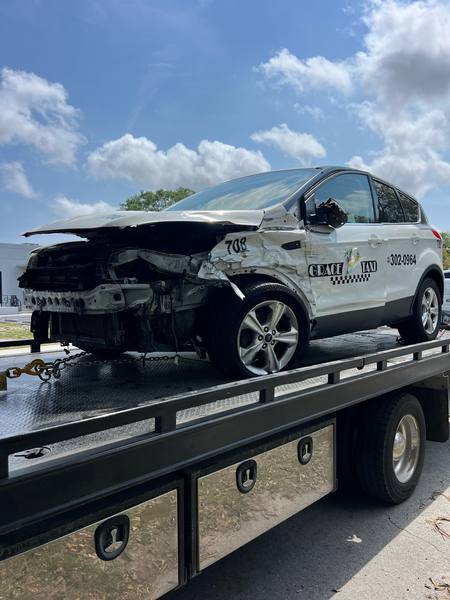
The practical move is to get multiple quotes rather than accepting the first discount you are offered. Different buyers apply different severity adjustments, and the spread between them tells you where the market really sits. A buyer who buys running cars daily has priced thousands of accident-history vehicles and will explain the number plainly. Compare that against an instant online offer and a dealer appraisal, then decide with three data points instead of one.
Yes, considerably. A parking-lot bumper repaint is judged very differently from a collision that deployed airbags or required structural repair. Buyers distinguish between cosmetic history and structural history, and so does the wholesale market that ultimately sets the price. If your accident was minor and professionally repaired, say so early and specifically, because vague accident history gets priced at the worst assumption.
What does not help is minimizing it. Describing a significant collision as a scratch that the inspector can see was not a scratch destroys your credibility and usually the deal with it. Describe the incident factually, provide the repair documentation, and let the buyer price the reality. Sellers who do this consistently get better numbers than sellers who make the buyer discover things, a pattern reflected in our seller reviews.
Repair receipts from a reputable shop are the single most valuable document you can produce. They show what was damaged, what was replaced, and who did the work, which converts an unknown risk into a known history. A post-repair inspection report or alignment printout adds further confidence. For private sales especially, documented professional repairs are what separate your car from the accident-history cars buyers are afraid of.
Service records help too, because they show the car was maintained before and after the incident. The theme is evidence: every document that proves the car was properly repaired and cared for narrows the discount. If you are selling to a cash buyer for a fast sale, bring the paperwork to the pickup. It will not turn an accident car into a clean-history car, but it ensures you are priced on the facts rather than the fear.
It helps to know what buyers see before they see it. Pulling your own report means no surprises during negotiation: you will know exactly which entries exist, how they are described, and whether anything on the report is wrong. Errors on vehicle history reports happen, and disputing one takes time you would rather spend before you are mid-negotiation than during it.
There is one more reason, specific to sellers who have owned the car since before the incident. If the report shows an accident you did not know about, perhaps from a previous owner, you want to discover that privately rather than hearing it from a buyer across the table. Forewarned is forearmed, and it costs little. Check what accident-history cars have actually brought in recently purchased vehicles, read our guide to odometer disclosure for the related paperwork rules, and if the car came from a fleet, our ex-rental selling guide covers that history too. Then call 954-787-5717 for a firm, honest number on the car as it is.
FAQ
Call 954-787-5717 for a cash offer. Free towing, cash on the spot, pickup usually within about an hour.
954-787-5717
 954-787-5717