No title? No problem in most cases. Free towing, cash on the spot.
Published October 19, 2026 by Instant Money Junk Cars
Selling a car with frame rust in Florida starts with an honest answer to one question: is it rust, or is it rot? Florida's humidity, salt air, and standing flood water attack a car's structure from the underside, where you rarely look. If the metal under your car is flaking, soft, or perforated, the vehicle may be at the point where repair no longer makes financial or safety sense, and selling it as-is to a buyer who prices parts and scrap weight becomes the sensible path.
This guide walks through how Florida rust actually develops, how to check your own car, when the damage crosses from cosmetic to dangerous, and what a car with serious frame rust is worth when you sell it. The goal is a clear-eyed decision, not a scare tactic. Plenty of rusted cars still have real value as parts donors or scrap, and a reputable buyer will tell you that plainly.
Most cars in Florida rust from the inside out, not the outside in. Salt air, heavy rain, and periodic flooding put moisture where factory rust-proofing is thinnest: inside frame rails, rocker panels, and subframe cavities. Once moisture gets trapped inside a boxed section, it has nowhere to drain, and corrosion quietly eats the metal from within while the visible body still looks presentable. Cars that sat in standing water during a storm season can carry this damage for years before it shows.
The other accelerator is age combined with mileage on rough roads. Underbody coatings crack, stone chips expose bare metal, and each repair that disturbed the factory finish becomes a starting point for corrosion. South Florida's year-round heat does not pause the chemistry; metal does not get a winter off. That is why a ten-year-old car in Miami can have worse underbody corrosion than a fifteen-year-old car in a dry climate. If your car has a flood history, the rust you see today may have started years ago in water that never fully drained from the frame rails.
You can do a meaningful inspection without a lift, though a shop on a rack is better. Park on a level surface, slide underneath with a flashlight, and look at the subframes, control arm mounting points, rocker panels, and the areas around the jacking points. Surface rust looks orange and powdery and sits on top of solid metal. Structural rust looks layered and flaky, and you will find spots where the metal is thin, soft, or perforated. Press gently with a screwdriver: if the tool goes through, you are looking at rot, not rust.
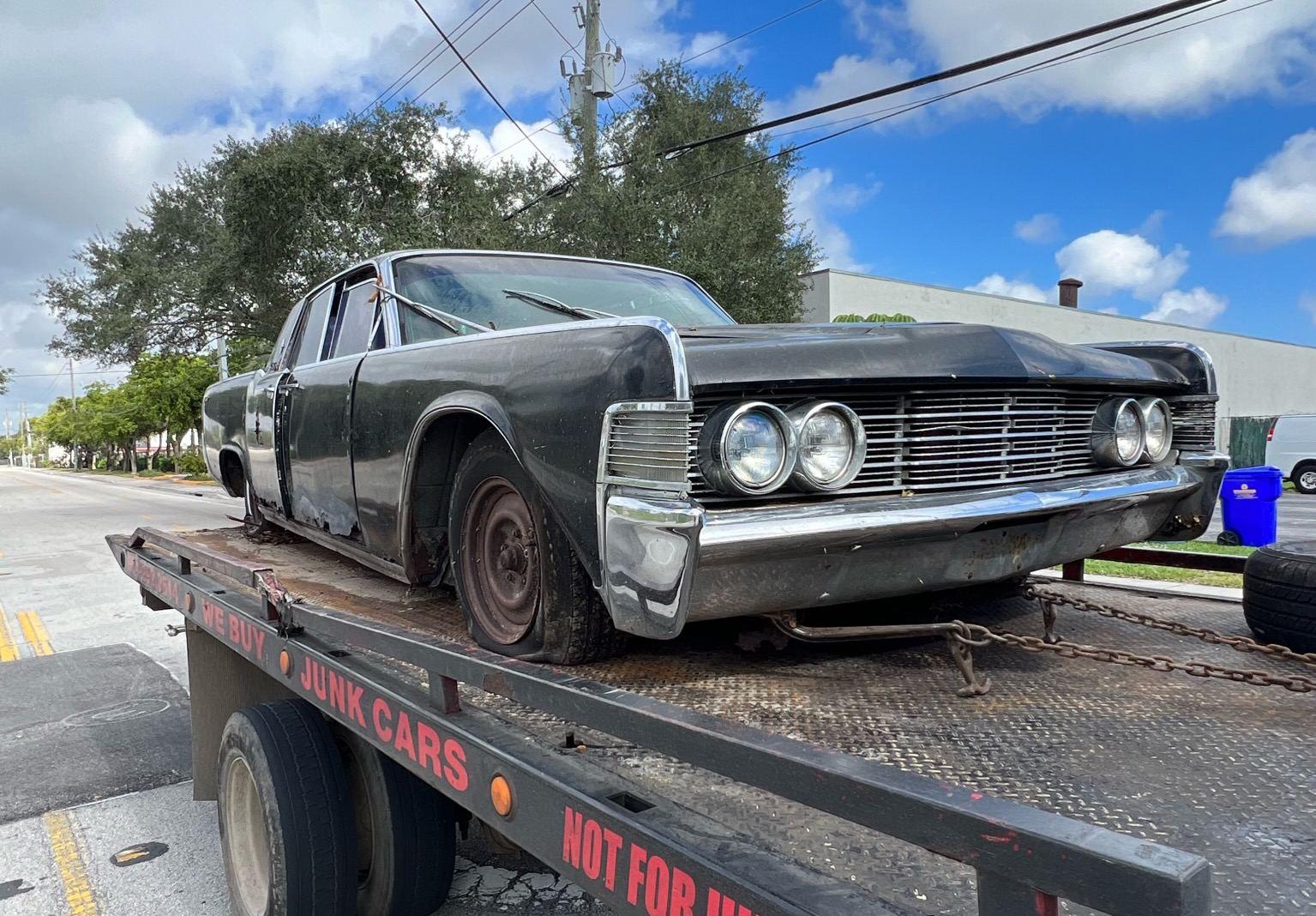
Pay special attention to where components bolt to the body. Rust at a control arm mount or subframe bolt hole matters far more than rust on a flat floor pan, because those are the points that carry the car's loads. Also check inside the trunk and under the carpet if you suspect flood exposure; silt and mineral lines are clues that water stood inside the car. Be honest with yourself and with any buyer about what you find. Junk buyers base offers partly on condition, and a car that was described accurately gets the quoted number at pickup, which is why junk car offers vary less when the seller is upfront.
Rust becomes a safety problem when it compromises the structure that holds the car together and absorbs crash forces. The critical parts are the frame rails or unibody structure, the front and rear subframes, suspension mounting points, and rocker panels on unibody cars. If any of these are perforated or soft, the car cannot be trusted in an emergency maneuver or a collision. A subframe failure at highway speed can separate a wheel or steering component with no warning.
Brakes and steering are also at risk when their mounting structure is compromised. Rust that has eaten into brake component mounts or steering rack attachments is a genuine hazard, not just a maintenance item. If you are unsure, have a trusted mechanic put the car on a lift and give you a straight answer. Many owners in this situation decide to stop driving the car and sell it from the driveway. That is exactly what free towing is for: you never have to drive an unsafe car to a buyer.
Technically, structural rust can be repaired by cutting out the rotted sections and welding in new metal, and restoration shops do this for valuable classics. Practically, for an ordinary daily driver, the math almost never works. Proper structural welding is labor-intensive, it requires the car to be stripped and jigged to hold alignment, and the repair still has to pass any inspection the next owner cares about. Costs routinely run into the thousands, which exceeds the value of most cars suffering advanced frame rust.
Patch jobs are cheaper, but they do not restore the structure's original strength, and they can hide continuing corrosion underneath. If a shop offers to weld plates over the rot for a few hundred dollars, understand what you are buying: cosmetics and time, not safety. For a car you plan to keep driving, that is a poor trade. For a car you plan to sell, it is worse, because covering up structural damage and then selling to a private buyer creates real liability. The clean path is to sell the car as-is, disclose the rust plainly, and let a buyer who specializes in frame-damaged cars price it for what it is.
A car with terminal frame rust is worth its parts and its scrap weight, not its Kelley Blue Book value. The engine, transmission, electronics, wheels, and body panels that are still solid all have value to recyclers and parts buyers. What you receive depends on the vehicle's weight, which reusable components remain, and current scrap demand. Our past purchases have ranged from $150 to $1,300, with a $525 median across 303 completed purchases, but every car is priced on its own facts and nothing is promised in advance. You can see what comparable vehicles actually brought on our recently purchased page.
The fastest way to find out is an online junk car quote, where describing the rust honestly gets you an accurate number. Then see how junk car pickup works: we tow the car from your driveway at no charge, pay cash on the spot, and handle the paperwork. When you are ready to sell your car fast, call 954-787-5717. A rusted-out car taking up your driveway becomes money in your hand, usually the same day.
FAQ
Call 954-787-5717 for a cash offer. Free towing, cash on the spot, pickup usually within about an hour.
954-787-5717
 954-787-5717