No title? No problem in most cases. Free towing, cash on the spot.
Published October 19, 2026 by Instant Money Junk Cars
If you are wondering how instant cash offers work, the short version is this: a buyer takes your car's details, checks them against current wholesale market data, and gives you a firm purchase price, usually valid for a set number of days. The whole point is to replace negotiation and waiting with a single number you can accept or decline.
But not every number labeled "instant offer" is the real thing. This guide explains how legitimate offers are calculated, what makes one firm, how to tell a genuine offer from a marketing estimate, and what causes a firm number to change after inspection.
An instant cash offer is a firm purchase price for your car, typically valid for a set window such as seven days. You provide the year, make, model, mileage, condition details, and title status, and the buyer returns a number it will pay if the car matches your description. The "instant" part refers to the quote, which arrives in minutes online or over the phone, not necessarily to the pickup, which is scheduled separately.
The offer is conditional in exactly one way: accuracy. It assumes your description is correct. When the buyer inspects the car and finds differences, the price can be adjusted, which is why honest condition answers are the foundation of the whole system. A firm offer is a commitment anchored to facts you both agree on, and that shared understanding is what makes the transaction fast. For the junk-car side of the same concept, our guide to how junk car offers are calculated shows the same logic applied to end-of-life vehicles.
Every buyer starts from wholesale market values for your year, make, and model, drawn from auction results and market data. Then come the adjustments. Mileage moves the number up or down from the baseline. Condition answers adjust it further: clean, average, rough, or damaged each map to a different price tier. Title status matters, since a lien or a branded title changes what the buyer can do with the car. Local demand plays a role too, because the same car can be worth more in a market where it sells quickly.
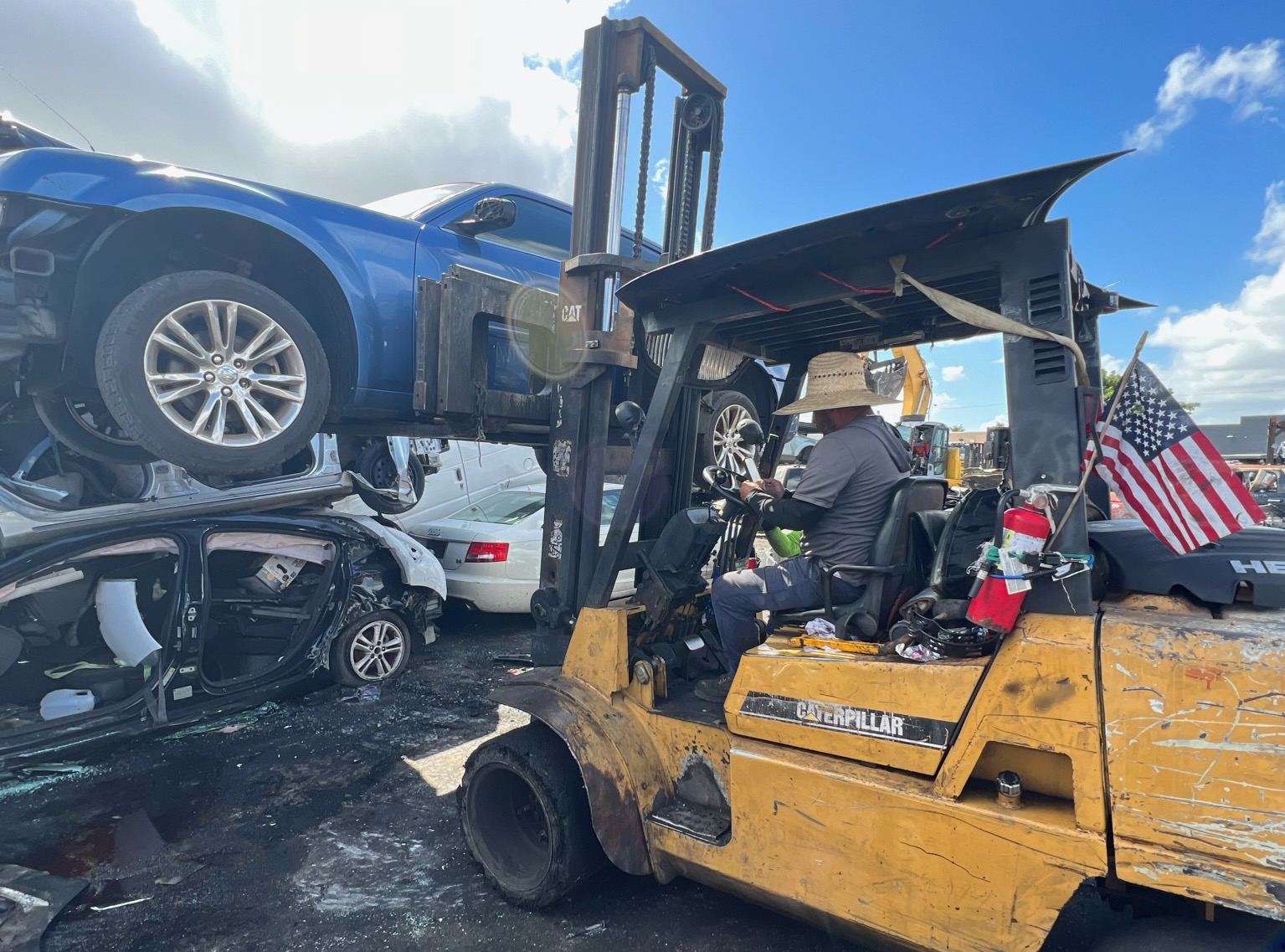
Finally, the buyer subtracts its own margin and costs: reconditioning, transportation, and the profit it needs to stay in business. That subtraction is why instant offers sit below private-party prices. You are paying for speed and certainty with part of the car's retail value, and understanding that tradeoff is what makes the number feel fair instead of low. The variation between buyers comes from different margins and different resale channels, which this explanation of why offers vary covers in detail.
A firm offer names a specific dollar amount, states how long it is valid, and comes from a buyer prepared to purchase. An estimate gives you a range, asks you to call or visit for the real number, or arrives without any expiration or commitment attached. Estimates are not dishonest by nature, but many are lead generation dressed as pricing: the number exists to get your phone number, not to buy your car.
The test is simple. Ask for the number in writing, ask how long it is good for, and ask what could change it. A legitimate buyer answers all three directly. A lead-generation funnel deflects to a phone call or an appointment. Either way, you leave without a number you can hold anyone to, which defeats the purpose of the exercise. When you get an online quote from an established local buyer, you should get the same straight answers you would get on the phone.
Undisclosed damage is the most common cause: prior accidents, paint work, or frame issues the form did not mention. Title problems come next, including liens you forgot about or a title that does not match your ID. Mileage above the submitted figure, warning lights on the dashboard, and missing keys or equipment round out the usual list. Each one represents a gap between the description the offer was based on and the car the inspector found.
The KBB process is a useful illustration of the same principle from a different angle. The KBB Instant Cash Offer explained shows how an online estimate becomes a final price only after a participating dealer inspects the car. The pattern is universal: the firmer the description, the firmer the number. Describe the car precisely, flaws included, and the pickup price should match the quote.
From a phone-first local buyer, the quote itself takes minutes. Have your year, make, model, mileage, general condition, and title status ready, and you will typically have a firm number before the call ends. Pickup is where local buyers separate from national platforms: same-day pickup is common, the truck comes to you, towing is free for cars, and payment is cash on the spot rather than a check or transfer days later. The quote is the fast part everywhere. What differs is everything after it: how quickly the truck arrives, whether towing costs you anything, and whether payment is cash in hand or a transfer that takes days to clear.
Instant Money Junk Cars serves Broward, Miami-Dade, and Palm Beach counties with 15 trucks and has purchased more than 10,000 cars. If your vehicle runs, get a firm phone offer now, or sell your used car fast with same-day pickup. Browse recently purchased cars and reviews from South Florida sellers, then call 954-787-5717. The quote is instant. The pickup can be today.
FAQ
Call 954-787-5717 for a cash offer. Free towing, cash on the spot, pickup usually within about an hour.
954-787-5717
 954-787-5717