No title? No problem in most cases. Free towing, cash on the spot.
Published October 19, 2026 by Instant Money Junk Cars
The Nissan Altima's CVT is the defining reliability story of the model. Owners widely report shuddering at low speed, hesitation on acceleration, whining noises, and sudden power loss, often progressing to complete transmission failure far earlier than a conventional automatic would. If your Altima's transmission is acting up, you are not dealing with a mystery: you are dealing with the most discussed weakness this car has.
The honest read is that a failed CVT is a sell-as-is situation, not a repair situation. A CVT replacement typically costs more than the car is worth with a good transmission, which means the repair-first route loses money by definition. Cash buyers purchase slipping-CVT Altimas every day, pricing the transmission as a known defect and the rest of the car on its own condition.
Owners commonly report shuddering or vibrating at low speed, hesitation or slipping when accelerating from a stop, a whining or droning noise that follows engine speed, and sudden loss of power that feels like the car gave up. A check-engine light with transmission codes often follows once the problem is advanced. These symptoms tend to progress rather than stabilize: a shudder that started last month is usually worse this month.
If you are seeing these signs, check whether your model year carries extended CVT warranty coverage before you sell. Nissan extended CVT coverage on certain Altima model years, and a dealer can confirm with your VIN in minutes. A covered repair could restore real value, and it is worth the phone call. Selling a car with an open recall covers how factory coverage interacts with a cash offer generally.
No. A CVT replacement typically costs more than it adds to the sale price, and on an Altima the gap is usually wide. You would be spending thousands on a transmission for a car whose value is capped by its age and miles, and you would never drive it long enough to get the money back. Selling as-is is the standard move for a failed CVT, and it is what most owners end up doing after getting the repair estimate.
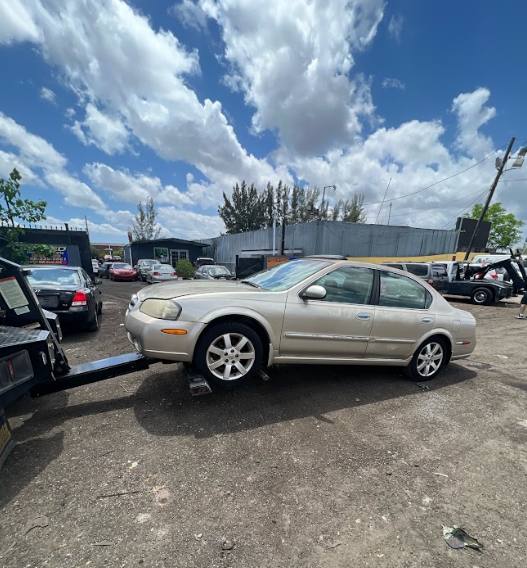
The comparison that settles it is the as-is offer versus the repaired value minus the repair cost. Get the as-is number first, then get the transmission estimate, and the math will speak for itself. How junk car offers are calculated shows why the transmission is weighted the way it is, and why offers vary between buyers explains the spread you will see if you shop the car around.
Yes. Slipping-CVT Altimas are among the most common cars cash buyers purchase, and the transmission is priced in as a known defect rather than treated as a total loss. The engine, body, interior, and electronics all still count, and Altima parts stay in demand. The offer is lower than a driving car, but it is real money, and it is available today rather than after a repair you should not pay for.
One practical note: a slipping CVT can fail completely without much warning, so getting the offer while the car still moves is the safer play. If the car is already undrivable, that is fine too: cars that cannot move under their own power are picked up with a winch, and towing is free. Selling a junk Nissan Altima takes a few minutes by phone, and if the car also stalls or cuts out while driving, the stalling guide helps you describe those symptoms accurately for a firm offer.
Be specific about what happens, when it happens, and how long it has been happening. Shuddering at low speed that started two months ago and is getting worse is a complete description; the transmission feels weird is not one. Mention whether symptoms appear cold or hot, whether any warning lights have appeared, and whether the car has ever gone into a reduced-power mode. Each detail sharpens the valuation.
If you have any codes from a scan, share them. Transmission codes tell the buyer exactly which part of the CVT is complaining, which is far more useful than a symptom description alone. And if a shop has already looked at it, say what they said: a professional diagnosis, even a bad one, is information the buyer can use, and informed buyers make firmer offers than guessing ones.
Do not try to warm the car up to hide cold symptoms or drive it hard before the buyer arrives to make it behave. Buyers test transmissions both cold and hot precisely because sellers try these things, and a symptom that appears during the test drive after being denied on the phone reads as dishonesty, which gets priced worse than the symptom itself. The Altima with a disclosed slipping CVT is a routine purchase; the Altima with a hidden one is a renegotiation.
The single best move with a failing Altima CVT is timing: get the offer while the car still moves under its own power. A driving car with a known transmission defect prices better than a non-runner, and the difference is entirely about when you call. Describe the shudder, the hesitation, and the whine exactly as they happen, and the number you get will be built on the real car, not a guess. That is how a slipping CVT turns into cash instead of a repair bill.
FAQ
Call 954-787-5717 for a cash offer. Free towing, cash on the spot, pickup usually within about an hour.
954-787-5717
 954-787-5717