No title? No problem in most cases. Free towing, cash on the spot.
Published October 19, 2026 by Instant Money Junk Cars
The Nissan Rogue has a Florida-specific transmission problem: CVT overheating and judder under sustained heat. Owners commonly report the car losing power on long hot drives, as if it suddenly gave up, then recovering after it cools down. It is the heat-management angle of the same transmission family that troubles the Altima and Sentra, and in South Florida it is the Rogue's defining weakness.
What makes this variant tricky is that it is intermittent. The Rogue drives fine in the morning and falls on its face on the afternoon commute, which tempts owners to keep driving it. But the underlying wear keeps progressing underneath the intermittent symptoms, and the protection-mode episodes get more frequent over time. Understanding what is actually happening is the first step to pricing the car correctly.
Owners commonly report that Rogue CVTs overheat in sustained heat, triggering a protection mode that cuts power to save the transmission from itself. It often recovers after cooling down, which is why the problem feels random. But each overheat episode reflects belt and pulley wear inside the unit, and the wear does not heal between episodes. Hotter days, heavier loads, and longer drives all make it worse, which is why the symptom peaks in a Florida summer.
If your Rogue does this, note the pattern when you request an offer: how long into a drive it happens, whether it recovers after cooling, and whether any warning lights appear. A buyer who hears the exact pattern can price it precisely. If the car also stalls or cuts out while driving, the stalling guide helps you describe those symptoms accurately as well.
Judder is the shuddering or shaking owners feel during acceleration, most noticeable at low to moderate speeds. It is one of the most reported Rogue CVT symptoms, and it usually signals belt or pulley wear inside the transmission: the belt is no longer gripping smoothly, so the car shudders as power transfers unevenly. Judder that is getting worse month over month is wear progressing, not a quirk to live with.
Judder plus overheating together is the combination that tells a buyer the transmission's remaining life is short. Either symptom alone gets priced as a defect; the pair gets priced as a transmission near the end. Describe both honestly when you call: how junk car offers are calculated shows how transmission condition anchors the whole valuation, and honest detail is what keeps the offer firm at pickup.
A cooler can help with heat management, but it does not reverse internal wear that is already causing judder. On a high-mileage Rogue with established symptoms, a cooler is a bandage, not a cure: it may delay the protection-mode episodes, but the belt and pulley wear underneath keeps advancing. It is a reasonable experiment on a Rogue with mild, early symptoms, and a waste of money on one that already judders badly.
The same logic applies to fluid services at this stage: helpful early, ineffective late. If the Rogue also runs hot in the engine-cooling sense, read the overheating sell-or-fix guide, since an engine that overheats alongside a transmission that overheats is a car with no cheap path forward.
A CVT replacement typically costs more than it adds to the car's value. Most owners with a failing Rogue CVT sell as-is, and the math supports them: the repair is priced for the transmission, while the car's value is capped by its age and miles. Why offers vary between buyers is worth reading if you are comparing numbers, since transmission-aware buyers price the defect precisely instead of guessing.
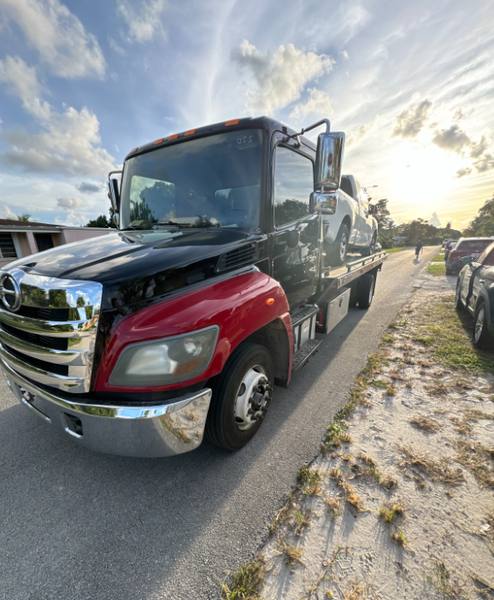
Selling a junk Nissan Rogue takes one honest description of the heat symptoms, including any limp-mode episodes. Cars with intermittent limp mode are purchased regularly, and disclosing the symptom keeps the offer firm. Free towing is included, pickup runs across Broward, Miami-Dade, and Palm Beach, and cash is paid on the spot once the title and ID check out.
It is tempting, but the math punishes waiting. A Rogue that still drives, even with heat symptoms, is priced as a driver with a known defect. A Rogue with a fully failed CVT is priced as a non-runner, and the gap between those two valuations is real money. Every long hot drive is a chance the transmission crosses that line somewhere inconvenient, converting your schedule and your offer in the same afternoon.
There is also a safety consideration. A CVT that cuts power without warning on a highway merge or in fast traffic is not just a valuation problem; it is a hazard to you and everyone around you. Protection-mode episodes are unpredictable by nature, which means you cannot plan around them. If the Rogue has started cutting power in traffic, the responsible move is to park it and arrange the sale from the driveway.
The better plan is to get the as-is offer while the car still moves and sell on your timeline rather than the transmission's. You choose the day, the pickup window, and the replacement plan, instead of reacting to a failure on the side of the road. A slipping, overheating Rogue sold deliberately is worth more than the same Rogue sold in a panic after it finally quit.
FAQ
Call 954-787-5717 for a cash offer. Free towing, cash on the spot, pickup usually within about an hour.
954-787-5717
 954-787-5717