No title? No problem in most cases. Free towing, cash on the spot.
Published October 19, 2026 by Instant Money Junk Cars
Selling a car with no insurance in Florida is entirely possible, because insurance is not required to transfer ownership. Plenty of non-running, stored, and parked cars sell every day with no active policy. The questions that actually matter are practical: how to handle the sale safely without coverage, what to do about test drives, and how the insurance lapse interacts with your registration. Here are the straight answers.
This is general information, not legal or insurance advice. Florida ties insurance to registration in ways that can create headaches if ignored, so the registration section below deserves your attention even if the sale itself is simple.
Yes. Nothing in Florida law requires an active insurance policy to sell a vehicle. The sale is a transfer of ownership documented by the title, the bill of sale, and the odometer disclosure. Insurance covers the operation of the car, not its ownership, so a car sitting in your driveway with a lapsed policy transfers just as cleanly as an insured one.
This is why uninsured cars are routine in the as-is market. Non-runners, project cars, and vehicles parked for months often have no coverage, and cash buyers purchase them without a second thought. The buyer tows the car away, so it is never operated uninsured on public roads. That single fact removes nearly all of the friction.
Do not allow them. Letting a stranger drive your uninsured car exposes you to liability you cannot afford, and in Florida, an accident in an uninsured vehicle can create financial responsibility problems that follow you. If you are selling privately, you have two safe options: require the buyer to show proof of insurance that covers the test drive before anyone turns the key, or add temporary coverage for the sale period.
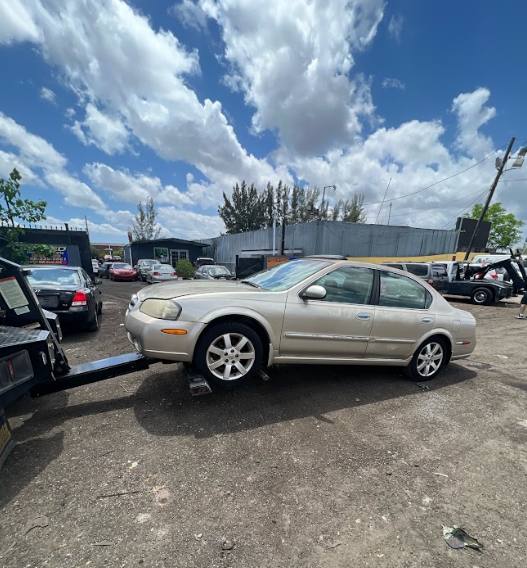
The simpler path is to sell to a buyer who does not need a test drive. Cash buyers who tow evaluate the car parked and pay on the spot, which eliminates the test-drive question entirely. If the private route is important to you, weigh the cost of a short-term policy against the hassle; our look at selling a car without an appointment covers the low-friction options. For most uninsured sellers, though, the tow-away sale is the obvious fit.
Not with an as-is buyer. The offer is based on the car's condition, parts value, and weight, and your insurance status does not enter the calculation. Private buyers are a different story: many will hesitate at an uninsured car, not because of the policy itself but because it signals the car has been sitting, which raises questions about batteries, tires, fluids, and everything else that deteriorates with disuse.
If the car has been parked for a while, be honest about how long and describe its condition accurately when you request a quote. When the money is agreed, our guide to how you get paid when selling a car explains the closing. The lack of a policy changes nothing about the payment.
This is the part that catches people. Florida monitors insurance coverage electronically, and a lapse on a registered vehicle can trigger a registration suspension, followed by reinstatement fees to get it back. The suspension machinery does not care that you were planning to sell the car next week. If your registration is already suspended, that is a separate issue from the sale, but it is one more reason to sell rather than keep paying for a car you do not use.
After the sale, cancel the registration properly by surrendering the plate if you are not transferring it to another vehicle, and confirm the timing on the insurance side with our page on when to cancel insurance after selling. Note the direction: you cancel after the sale closes, not before. Canceling early on a car you still own is what creates the lapse problem.
No, not legally on public roads. Florida requires personal injury protection and property damage liability for any registered vehicle operated on public roads, and driving uninsured can bring fines, a suspended license, and personal liability for any damage you cause. Driving it to the buyer is still driving. If the car must move under its own power, the safe options are a buyer who tows, a transport trailer, or a temporary policy that covers the trip.
This is another reason the tow-away sale fits uninsured cars so well. The car never turns a wheel on a public road under your responsibility; it goes from your driveway onto the truck. No test drives, no transport risk, no insurance gap to explain. When the tow driver arrives, the transaction is already structured so that nothing about the car's insurance status matters.
Usually not, for an as-is sale. A new policy costs money every month, and if the buyer is towing the car away, the coverage serves no purpose in the transaction. Save the premium. The exception is the private sale where you need test drives to get your price; there, a short-term policy can pay for itself by unlocking buyers who would otherwise walk away.
For the tow-away route, start with an online junk car quote. See how junk car pickup works, then sell your car fast with free towing and cash paid on the spot. Past purchases have ranged from $150 to $1,300 with a $525 median across 303 completed buys, and recently purchased vehicles show what cars like yours brought. Call 954-787-5717. No policy, no test drives, no problem.
FAQ
Call 954-787-5717 for a cash offer. Free towing, cash on the spot, pickup usually within about an hour.
954-787-5717
 954-787-5717