No title? No problem in most cases. Free towing, cash on the spot.
Published October 19, 2026 by Instant Money Junk Cars
If you plan to sell your car before buying a new one, you are considering the order of operations that gives you the most negotiating power. Selling first turns you into a cash buyer at the dealership, which simplifies the negotiation and removes the trade-in as a lever the dealer can adjust.
But the order has a real tradeoff in Florida, where trading in usually saves sales tax on the new car. This guide explains the leverage dynamics, the downside of selling first, how to handle the tax credit honestly, and how to time the two transactions so you are never without a car longer than you choose.
When you arrive at a dealership with a trade-in, the dealer negotiates two numbers at once: the price of the new car and the value of your old one. That complexity favors the house, because margin can move between the two figures invisibly. A discount on the new car can be quietly offset by a low trade value, and most buyers cannot track both moving targets in real time. Selling first collapses the negotiation to a single number: the price of the car you are buying, paid by a buyer holding cash.
Cash buyers also negotiate differently in practice. Without a trade muddying the deal, every dollar of discount is visible, every fee is exposed, and the salesperson cannot use your attachment to your old car as leverage. The psychological shift matters too: a buyer who can walk away and already has transportation money in hand negotiates from patience rather than urgency. Our comparison of trade-in versus selling outright works through the math that makes this strategy pay.
The obvious one is the gap: you may be without a car for a few days between the sale and the purchase. For households with a second vehicle, that gap is a non-issue. For single-car households, it requires planning: a rental for a few days, borrowing a car, or timing the sale within days of the purchase. The cost of a short rental is usually small compared to the negotiating advantage, but it is real and should be counted.
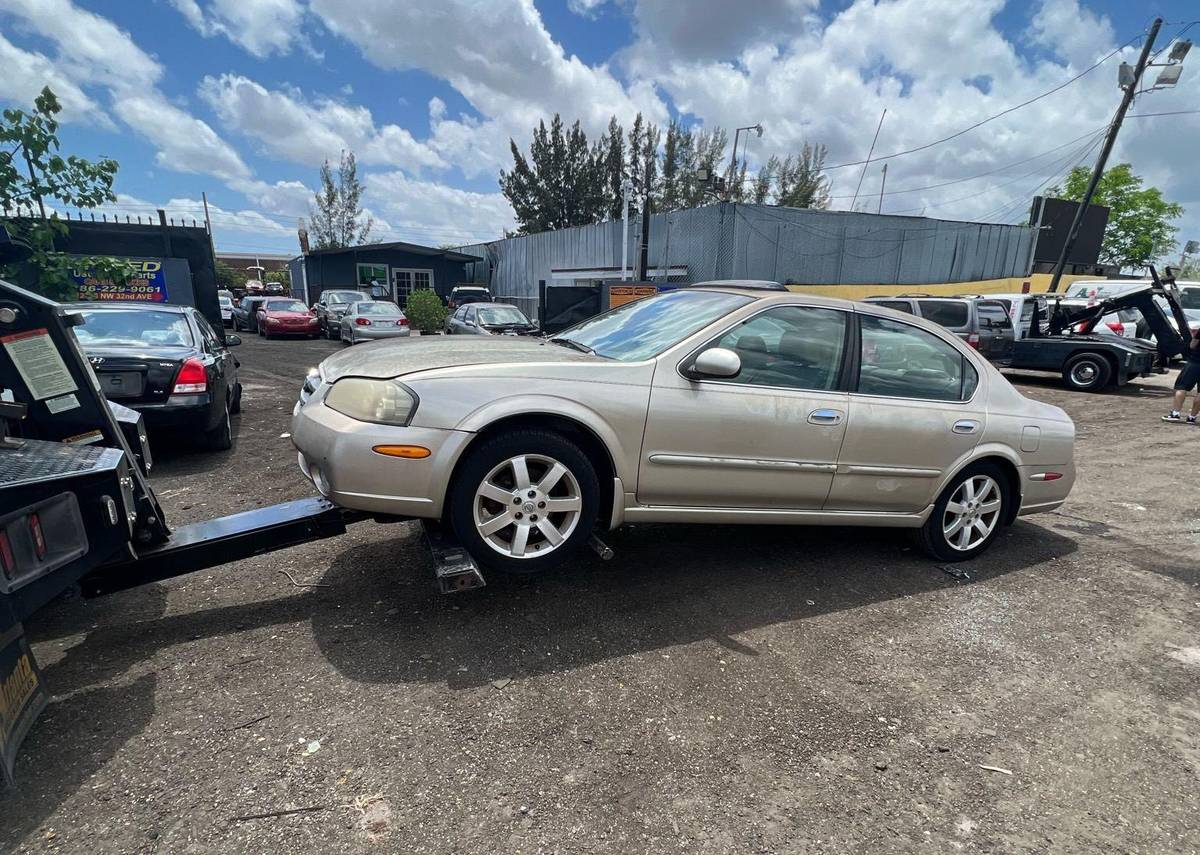
The subtler downside is the Florida trade-in tax credit. When you trade a car toward another vehicle at a dealership, the trade value is generally deducted before sales tax is calculated, which saves real money. Selling first usually means forfeiting that saving. On a high-value trade the credit can exceed a thousand dollars, which is not a rounding error. Our explainer on the Florida trade-in tax credit shows how to calculate exactly what you would give up.
Run the three numbers. First, get a firm cash offer for your current car, which is your floor. Second, get the dealer's trade number. Third, calculate the tax credit by multiplying the trade value by your local sales tax rate, and add it to the trade number. If the cash offer beats the trade plus the credit, selling first wins on price. If the trade plus the credit wins, trading in is the better financial move, and the leverage argument becomes secondary.
Do not skip the fee check on the dealer side. Documentation fees and add-ons can quietly erase a trade advantage, so read the guide to dealer fees before you sign anything. And get your cash number early in the process, not the day before you buy: a trade-in cash quote by phone gives you the floor that anchors every later decision.
The ideal sequence is: cash offer in hand first, then shop for the new car as a cash buyer, then decide at the end whether the dealer's trade number beats your offer plus the tax saving. You do not have to commit to selling first until the numbers tell you to. The cash offer is simply information until you act on it, and having it early costs nothing.
For the actual timing, local buyers schedule around your day, so you can coordinate the sale with your purchase down to the same afternoon. Sell the old car in the morning, buy the new one after lunch, and the gap is hours rather than days. If your current car runs well, get a firm phone offer now so the number is ready when the new-car deal comes together. Sellers who ran this sequence describe it in our reviews.
Then take the trade and congratulate yourself on a well-run process. There is no prize for selling separately when the dealer's number, plus the credit, is higher. The point of selling first as a strategy was never ideology. It was information and leverage: you shopped with a floor, negotiated cleanly, and let the arithmetic decide. That is the entire game, played correctly.
And if the dealer cannot beat your number, you already have the alternative waiting. Sell your used car fast with same-day pickup and cash on the spot, timed to your purchase. For the full framework on using an outside offer at the dealership, see cash buyer versus dealer trade-in. Instant Money Junk Cars serves Broward, Miami-Dade, and Palm Beach counties with 15 trucks and has purchased more than 10,000 cars. One call to 954-787-5717 gets you the number that starts the whole strategy.
FAQ
Call 954-787-5717 for a cash offer. Free towing, cash on the spot, pickup usually within about an hour.
954-787-5717
 954-787-5717