No title? No problem in most cases. Free towing, cash on the spot.
Published October 19, 2026 by Instant Money Junk Cars
What finally kills a Toyota Camry is rarely the engine itself. Well-maintained Camrys commonly pass 200,000 miles, and the four-cylinder and V6 engines are famously durable. What retires a Camry is usually rust, a major transmission failure, or catastrophic oil consumption on certain generations, and most often it is the owner deciding that one more repair is not worth it. The trick is recognizing that point before you spend the money.
The Camry's legendary reliability creates a unique seller psychology: owners keep repairing long past the economic break-even point, because the car has always come back before. Every car has a last economical repair, though, and the Camry's is just further out than most. This guide names what actually ends a Camry so you can make the sell-or-repair call with clear eyes.
Structural rust is the first. South Florida's salt air and standing water corrode floor pans and subframes over time, and once rust is structural, no repair restores the car economically. A major transmission failure is the second: on a car worth a few thousand dollars, a transmission replacement can exceed the car's value in one invoice. The third is oil consumption on certain four-cylinder generations, which are commonly reported to drink oil as they age. If your Camry needs oil between changes, that is expected wear for those years, but it also means the engine is on a countdown that only ends one way.
Notice what is not on the list: high mileage by itself, worn suspension, tired A/C, cosmetic damage. Those are maintenance items, and a Camry with 220,000 miles and a straight body is still a car with value. What old cars are worth covers the same idea from the other direction: condition and completeness matter more than the odometer.
When the estimate exceeds the car's working value minus the as-is offer. Put numbers to it: if the as-is offer is the floor and the repaired value is the ceiling, any repair that costs more than the gap between them loses money. A four-figure transmission repair on an older Camry that already has a solid as-is offer on the table is a repair that pays you nothing. The sell-or-fix guide for overheating cars applies the same math to cooling failures, and the stalling guide covers it for drivability problems.
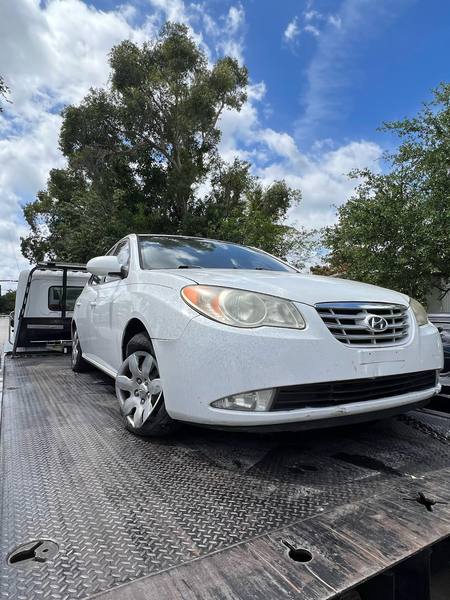
The honest version of this math is that most Camrys are sold one repair too late. The owner pays for the repair, the car runs for six months, then the next system fails, and the car is sold anyway for less than it would have brought before the repair. Selling while the car still runs, before the last big invoice, is almost always the better financial outcome.
Yes, and running condition is one of the strongest factors in a cash offer. A running Camry, even an old one with high miles, is worth more than a dead one, because a running drivetrain is a known quantity a buyer can price confidently. That is the single best reason not to wait: every month you keep driving a Camry with a known terminal issue is a month closer to the day it does not start, and the offer drops with it. How junk car offers are calculated shows exactly how much weight running condition carries.
Selling a junk Toyota Camry takes one honest phone call: the year, the mileage, what still works, and what the car needs. The offer reflects the car's real condition, pickup is free across Broward, Miami-Dade, and Palm Beach, and cash is paid on the spot. If your Camry is approaching its last economical repair, that call is worth making before the repair, not after.
The inspection is quick because the checklist is short: does it start and idle cleanly, does the transmission engage and shift without slipping, and is the body straight with no structural rust. Those three answers determine most of the offer. Everything else, the worn seats, the faded paint, the tired suspension, is expected wear on an old Camry and gets priced as background, not as defects.
Rust gets special attention in Florida. The buyer will look at the floor pans, the subframe, and the areas around the suspension mounts, because structural rust is the one thing that moves a Camry from driver valuation to parts valuation. Surface rust on bolts and brackets is normal and barely registers; flaking metal and soft spots are what change the number. If you have already checked these spots yourself, say so when you call: an owner who knows their car's underside gets a firmer offer.
Oil consumption gets one direct question: does it need oil between changes, and how much. On the four-cylinder generations known for consumption, an honest answer is priced as expected wear, not as a defect. What hurts is the owner who says it uses no oil while the dipstick tells a different story at pickup. The pattern across all three checks is the same: the buyer is not looking for perfection, just for a description that matches the car.
The bottom line on a Camry is that the car earned its reputation by being worth fixing, right up until the day it is not. Your job as the owner is to notice that day arriving instead of paying past it. If your Camry is approaching a four-figure repair, get the as-is offer first: one honest phone call gives you the floor number, and the floor number makes every other decision easy. Call 954-787-5717 before the next repair, not after it.
FAQ
Call 954-787-5717 for a cash offer. Free towing, cash on the spot, pickup usually within about an hour.
954-787-5717
 954-787-5717