No title? No problem in most cases. Free towing, cash on the spot.
Published October 19, 2026 by Instant Money Junk Cars
The airbag light, or SRS light, on your dashboard means the supplemental restraint system has detected a fault, and while it is on, the airbags may not deploy in a crash. If you are looking to sell a car with the airbag light on, the key distinction is this: a warning light is usually an electrical fault, often a sensor, clockspring, or seatbelt pretensioner, which is a much smaller issue than deployed airbags from a significant crash.
SRS repairs commonly run from several hundred to over a thousand dollars for diagnosis plus parts, which is why many owners choose to sell instead. This guide covers what the light means, what the repair costs look like, how it differs from airbag deployment, and why the as-is lane is the smoother path for SRS-light cars.
It means the SRS control module found a fault somewhere in the system and disabled deployment as a precaution. The common causes are a failed clockspring in the steering column, a bad impact sensor, a seatbelt pretensioner fault, or corroded wiring connectors, all electrical, none structural. The car drives normally; the restraint system simply may not protect you in a collision while the light is on.
That safety caveat is worth taking seriously while you still own the car. Drive it minimally until you decide, and do not let the light become background noise. A diagnostic scan identifies the specific fault code, which is useful information whether you repair or sell. If your car is also subject to an open recall, check that separately: our article on selling a car with a Takata airbag recall covers how recalls interact with a sale.
Diagnostic plus parts commonly runs several hundred to over a thousand dollars. A clockspring replacement is typically the mid-range job; a control module or wiring harness fault climbs higher. Dealer parts for SRS components are expensive, and independent shops vary in their willingness to work on restraint systems, since liability makes some shops decline the work entirely.
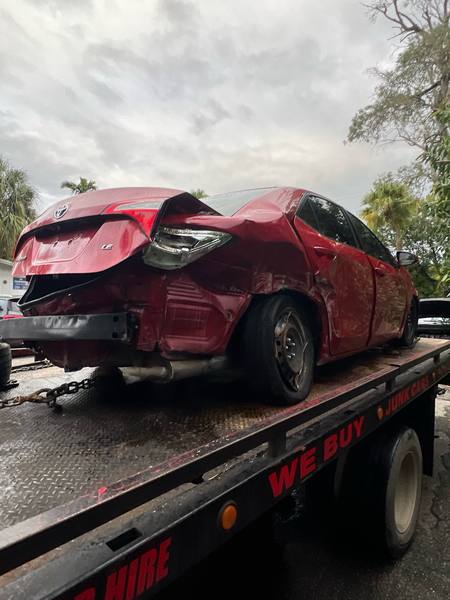
The repair math follows the usual rule: compare the estimate against the car's working value and the as-is offer. On a newer, valuable car, fixing the SRS system is worth doing, both for safety and resale. On an older car where the estimate is a large fraction of the car's value, selling as-is is the rational move. Getting an online quote first gives you the floor number for that comparison.
Yes, and the difference matters for both value and buyer interest. Deployed airbags mean the car was in a significant crash: the bags, the module, the pretensioners, and often the dashboard all need replacement, and the car carries crash history that shows on its record. A warning light with no deployment is usually an electrical fault in a car that was never in a serious collision. Buyers treat these as different categories, and the light-only car prices better.
If your airbags did deploy, the relevant comparison is the totaled-or-repair decision, which our article on keeping or selling a totaled car covers in full. For the light-only case, describe it accurately when you request an offer: which light is on, whether the bags ever deployed, and what a scan showed if you had one done. Selling a car with airbag deployment is the page for the deployment case; the as-is lane handles both.
Yes. Disclose it plainly, in writing, as part of the condition description. As-is buyers purchase SRS-light cars regularly and price the fault in without fuss; it is a known quantity, not a mystery. What you must not do is clear the code to hide it: the light returns, the buyer discovers it, and the repricing at pickup will be worse than the honest discount would have been.
The private-sale path is harder for SRS-light cars because the light worries retail buyers and will surface on any pre-purchase inspection. That is why the as-is lane is the smoother route: the buyer already expects faults, prices them professionally, and closes the sale in one visit. The vehicles we have recently purchased include warning-light cars as a matter of routine.
Like any as-is sale. Request the quote with the year, make, model, mileage, and the SRS status described honestly. Accept the offer, schedule a pickup window, and have the title and your ID ready. The car drives onto the truck under its own power in most cases; if it does not run for other reasons, pickup covers non-running vehicles with free towing.
If you had a diagnostic scan done, keep the report and hand it to the buyer. The fault code tells the buyer exactly which component failed, which removes guesswork from the pricing and often improves the offer slightly, since a known clockspring fault is cheaper to address than an unknown SRS problem. Do not clear the code before the sale in an attempt to hide it: the light returns within a drive cycle or two, and a buyer who finds a recently cleared SRS code will assume the worst about what else was cleared. Honesty about the light, backed by the actual scan report, is the combination that produces a firm offer with no renegotiation at pickup.
Selling fast is available the same day across Broward, Miami-Dade, and Palm Beach counties, and payment happens at pickup once the paperwork checks out. Call 954-787-5717 with an honest description of the airbag light status, and you will have a firm as-is number within minutes.
FAQ
Call 954-787-5717 for a cash offer. Free towing, cash on the spot, pickup usually within about an hour.
954-787-5717
 954-787-5717