No title? No problem in most cases. Free towing, cash on the spot.
Published October 19, 2026 by Instant Money Junk Cars
The insurer just declared your car a total loss, and the question every owner asks next is whether to keep the car, take the payout, or sell it outright. Should I keep my totaled car? For most owners the honest answer is no, but the right move depends on the payout math, the real cost of making the car safe again, and what a cash buyer will pay for it as it sits.
This guide compares your three options side by side: accepting the insurer's settlement and walking away, buying the car back through owner retention, or selling the damaged car as-is to a buyer who handles wrecked vehicles. Each path has a clear financial logic, and the best choice is the one with the highest net number once every cost is counted.
A total loss declaration means the insurer decided repairs cost more than the car is worth, typically measured against the car's actual cash value just before the crash. From that moment you have three paths. Path one is the simplest: accept the payout, which is the pre-accident value minus your deductible, sign the car over to the insurer, and move on. Path two is owner retention, where you keep the car and the insurer subtracts its salvage value from your payout. Path three is selling the wrecked car as-is to a buyer who purchases totaled cars, which sidesteps the insurance process entirely. Most owners default to path one without comparing the numbers, but the comparison takes less than an hour and occasionally changes the answer.
Accepting the settlement is the right move when the payout is fair and you have no interest in a damaged car. Fairness is checkable: ask the adjuster for the valuation report, review the comparable vehicles they used, and confirm the comps match your car's mileage, trim, and condition before the crash. If your car had lower miles or better options than their comps, present that evidence, since total-loss settlements are negotiations, not rulings. For a detailed walkthrough of the settlement side, how to check whether the insurer's number is fair covers the valuation process and your leverage. Accepting also makes sense when the damage is structural or involves airbags, since those repairs carry safety risks that a payout neatly avoids. If you go this route, what to know about selling a car after an accident covers the loose ends like remaining loan balances and paperwork.
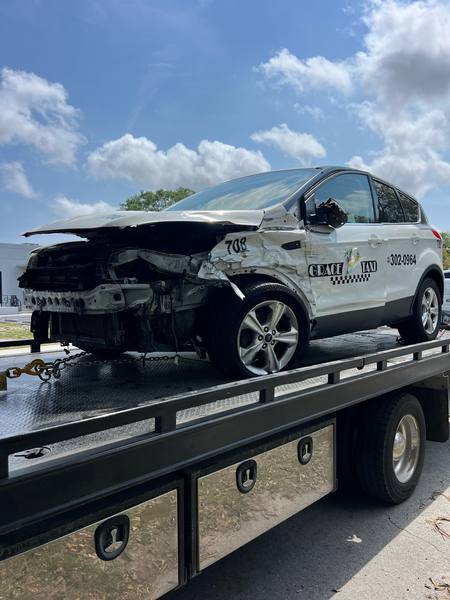
Retention makes sense in a narrow set of cases. The damage should be genuinely cosmetic, the car should be safe to drive as it sits, and you should plan to keep it for years, because a retained totaled car in Florida typically carries a branded title that cuts its resale value sharply. Run the math honestly: the insurer's payout minus the salvage deduction, minus the realistic cost of making the car roadworthy and safe, compared against buying a comparable replacement. Most owners find the math does not survive contact with a body shop estimate. Structural damage, deployed airbags, or flood exposure make retention a poor bet in nearly every case, since the long-tail repair costs exceed what the numbers suggest at first glance. Owner retention explained with real math walks through the salvage deduction and title consequences in detail before you decide.
Selling as-is wins when the insurance path is slow, the payout is underwhelming, or you simply want the situation resolved this week. The math to compare is straightforward: the insurer's net payout after your deductible versus a cash buyer's as-is offer, minus the value of your time spent in adjuster back-and-forth. After a major storm or a busy season, adjuster backlogs can stretch claims into weeks, and that waiting period has a real cost. An as-is sale also avoids the repair-estimate dance entirely; the buyer prices the car as it sits and handles the towing. If the accident was recent, what to do after a car crash covers the immediate steps before any sale, including documentation that protects both your claim and your sale. When you are ready for a number, an online quote takes a few minutes and gives you the third option's value in writing.
Put the three net numbers side by side on paper. One: the insurer's payout minus your deductible, with the car gone. Two: the reduced payout from retention, minus the realistic cost of safe repairs, with a branded-title car you keep for years. Three: a cash buyer's as-is offer with free towing and payment at pickup. Take the highest net number, and weight it by how much you value being done with the situation. Most totaled cars end up as a choice between paths one and three, and the deciding factors are usually the size of the deductible and how long the claim will take. How pickup works shows what the as-is path looks like in practice, and selling your car fast is the route owners take when the decision is to resolve it this week rather than next month.
FAQ
Call 954-787-5717 for a cash offer. Free towing, cash on the spot, pickup usually within about an hour.
954-787-5717
 954-787-5717