No title? No problem in most cases. Free towing, cash on the spot.
Published October 19, 2026 by Instant Money Junk Cars
Instead of handing your wrecked car to the insurer, you can keep it. When you buy back a totaled car from insurance through owner retention, the insurer subtracts the car's salvage value from your payout and you keep the vehicle. The question is whether the math works, and for most owners it does not, because the salvage deduction, the repair bill, and the branded title combine into a worse deal than it first appears.
This guide walks through how owner retention works step by step, how the salvage value is decided, what happens to the title in Florida, and the narrow situations where keeping the car is the rational choice. The goal is a decision you can defend with numbers, not sentiment.
The process is straightforward. After the total-loss declaration, you tell the adjuster you want to retain the vehicle instead of surrendering it. The insurer estimates the car's salvage value, meaning what the wreck would fetch at salvage auction, and deducts that amount from your settlement. You receive the reduced payout and keep the car. The insurer then reports the total loss to the state, which triggers the title branding. There is no separate purchase transaction and no haggling over the retention itself in most cases, though you can and should ask how the salvage figure was reached. If you are weighing this against simply walking away, the three post-total-loss options compared puts retention side by side with the alternatives.
The salvage value is the insurer's estimate of what your wrecked car would bring at a salvage auction, and it is typically a fraction of the pre-accident value. The number comes from the insurer's salvage vendor or internal tables, not from a public market you can check yourself. You can ask the adjuster for the basis of the figure, and if it looks inflated, an inflated salvage value directly reduces your payout, you can push back with evidence or through the policy's appraisal process. Get the salvage number in writing alongside the payout figure so you can verify the subtraction yourself; adjusters deal in enough numbers that a written breakdown protects both sides from confusion. In practice most owners accept the number, but knowing it is an estimate rather than a fact gives you standing to question it. A useful reference point is what cash buyers pay for totaled cars, since that reflects a real market for wrecked vehicles rather than an internal estimate. If the insurer's salvage figure is far above what the open market would pay for the wreck, that gap is worth questioning before you accept the retention terms.
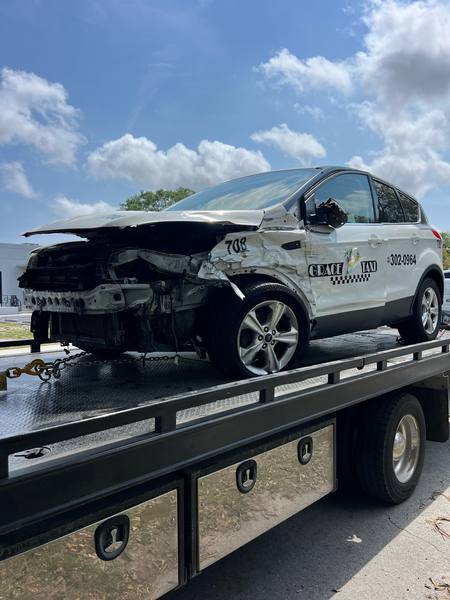
In Florida, a retained totaled car typically receives a branded title, often marked salvage or rebuilt depending on the path it takes back to the road. That brand follows the car permanently and does three things: it cuts the resale value substantially, it can complicate or raise the cost of insurance, and it requires the car to pass inspection before it can be registered for road use again in most cases. This is the hidden cost of retention that the payout math does not show. A car worth keeping for five more years of personal use can absorb a branded title; a car you might sell in eighteen months cannot. For the specifics of how these brands work, what a salvage title means in Florida covers the categories and consequences. And if you ever sell the car later, your disclosure obligations when selling still apply, while title washing schemes in Florida explains a fraud to avoid at all costs.
Retention makes sense when four conditions hold at once. The damage is genuinely cosmetic, with no structural, frame, airbag, or flood involvement. The car is safe to drive as it sits or needs only minor work you can verify. You plan to keep it for years, so the branded title never becomes a resale problem. And the math works: the reduced payout minus realistic repair costs still beats the alternatives. That combination is rarer than owners expect, because body shop estimates have a habit of growing once work begins. Sentimental value does not count in this calculation. Neither does the purchase price you paid years ago. The only question is what the car is worth to you now, in its damaged state, against the net payout you would receive by letting it go.
Write it as a simple equation. Start with the insurer's total-loss payout, subtract your deductible, then subtract the salvage value to get your net retention payout. Now subtract the realistic cost of making the car safe and roadworthy, using a written estimate, not a guess. Compare that final number against two alternatives: walking away with the full payout, and selling the wreck as-is. In most cases the as-is sale or the full payout wins, because the salvage deduction plus repairs consumes the apparent savings. Getting an online quote for the car as it sits gives you the third number in minutes, and how pickup works shows how quickly that path resolves. If the equation favors retention, proceed with eyes open; if it does not, selling the car fast converts the wreck into cash without the branded-title aftermath.
FAQ
Call 954-787-5717 for a cash offer. Free towing, cash on the spot, pickup usually within about an hour.
954-787-5717
 954-787-5717