No title? No problem in most cases. Free towing, cash on the spot.
Published October 19, 2026 by Instant Money Junk Cars
An as-is car sale in Florida is a legal concept with real boundaries, not just a phrase sellers write to avoid complaints. Generally, selling a car as-is means the seller makes no warranties about the vehicle's condition and the buyer accepts it with all of its faults. But as-is has limits: it does not protect against fraud, it works differently for dealers than for private sellers, and certain warranties cannot be disclaimed as easily as people assume.
This is general information about Florida law, not legal advice, and it is not a substitute for an attorney's guidance on your situation. What follows is the statute-focused picture: what as-is actually does, where it stops, and how to use it correctly whether you are buying or selling.
In general, an as-is sale means the seller disclaims warranties and the buyer takes the vehicle in its present condition, with all faults, known and unknown. The buyer is expected to inspect before buying, and after the sale, problems that surface are the buyer's responsibility, provided the seller did not misrepresent or conceal anything. The classic formulation is buyer beware, and Florida courts generally enforce clear as-is terms between private parties.
For the disclaimer to do its work, it generally needs to be clear and in writing. A written bill of sale stating the vehicle is sold as-is, with the date, price, VIN, and both parties' signatures, is the standard. Verbal as-is claims are weak evidence if a dispute ever arises. This legal framing is distinct from the practical seller's guide in our post on selling a car as-is, explained, which covers the deal mechanics rather than the statutes.
No. This is the most misunderstood boundary in as-is sales. As-is language covers honest unknowns: the transmission that failed a month after the sale through no fault of the seller, the electrical gremlin nobody knew about. It generally does not cover fraud or active concealment. A seller who knew the frame was cracked and said nothing, who hid flood history, or who misrepresented the mileage cannot hide behind as-is language if the buyer proves deception.
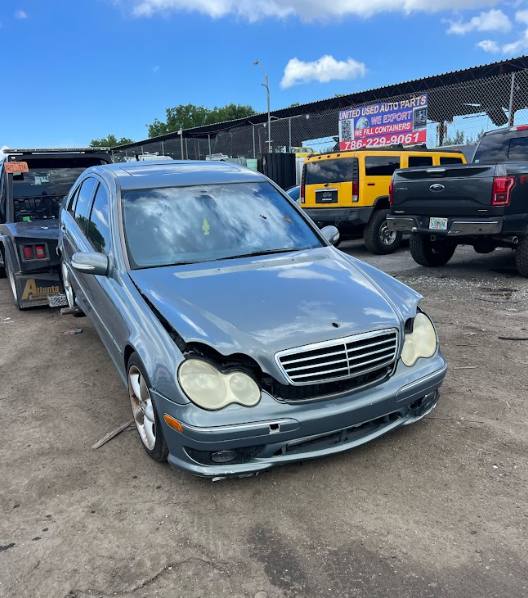
Florida's Deceptive and Unfair Trade Practices Act adds another layer, particularly for sellers operating as businesses. The practical lesson for an honest seller is straightforward: as-is protects you when you were honest, and nothing protects you when you were not. Disclose the major issues in writing, sell as-is, and the legal exposure that worries most sellers effectively disappears. Our plain-language guide to disclosing damage when selling covers exactly what to say and how.
Generally, yes. Licensed dealers in Florida operate under statutory disclosure obligations that private sellers do not face, and they cannot disclaim everything a private seller can. Federal law also matters here: the Magnuson-Moss Warranty Act governs written warranties, and dealers who offer any warranty, even a short one, take on duties that pure as-is private sellers avoid. A dealer's as-is sale still carries more paperwork and more residual obligation than a private party's.
There is also the implied warranty of merchantability, which the Uniform Commercial Code generally attaches to sales by merchants. Disclaiming it requires specific conspicuous language, and even then, the disclaimer does not cure fraud. Private sellers who are not merchants are generally outside the implied-warranty framework to begin with, which is one more reason the private as-is sale is legally simpler. Buyers should know that a dealer's handwritten as-is notation on a buyer's order does not override these statutory duties. If a dealer promises one thing verbally and writes as-is on the paperwork, the written warranty law generally looks at what was actually agreed, and deceptive practices statutes still apply. For private sellers, the mirror principle holds: write down what you mean, mean what you write, and do not rely on a two-word phrase to do the work of honest disclosure. None of this is a reason to skip the written bill of sale; it is the reason to have one.
Yes, always. The bill of sale should state plainly that the vehicle is sold as-is, without warranties express or implied, and both parties should sign and date it. Include the VIN, the odometer reading, and the sale price. Each party keeps a copy. This document is your evidence of the terms if the buyer later claims they were promised something different.
Keep the title transfer paperwork equally clean. As-is describes the condition terms of the deal, not the ownership mechanics, and the title still has to transfer properly through the state. Our guide to how to transfer a Florida car title walks through the signing and filing steps. And if you are on the buying side of an as-is deal and want to avoid the classic traps, our junk car scams to avoid guide is worth a read before money changes hands.
It is the natural fit. Cash and junk buyers purchase vehicles as-is as a matter of course: they price the car's actual condition, tow it away, and handle the paperwork, including the bill of sale and the title transfer. There is no warranty discussion because both sides understand the deal. You describe the car honestly, the offer reflects what you described, and the sale closes on the spot.
Get an online junk car quote for your as-is vehicle. See how junk car pickup works, then sell your car fast with free towing and cash paid on the spot. Past purchases have ranged from $150 to $1,300 with a $525 median across 303 completed buys. If the private-sale route and its warranty worries appeal to you instead, our look at private party sale hassles will help you decide. Call 954-787-5717 when you are ready.
FAQ
Call 954-787-5717 for a cash offer. Free towing, cash on the spot, pickup usually within about an hour.
954-787-5717
 954-787-5717