No title? No problem in most cases. Free towing, cash on the spot.
Published October 19, 2026 by Instant Money Junk Cars
The best time to sell a car in Florida is typically late winter through spring, when tax refunds put buyers in the market and snowbird season keeps demand high from October through April. But timing is only one factor, and waiting for a perfect month usually costs more in depreciation than it gains in price.
This guide breaks down Florida's selling seasons, how different vehicle types move through the year, and the honest math on whether waiting ever pays. The goal is simple: sell when the combination of season and your car's condition gives you the strongest number, not a theoretical peak months away.
February through May is typically the strongest window. Tax refunds land in buyers' accounts, the weather is at its best, and the roads are full of seasonal residents who may be shopping. Demand stays reasonably healthy through the early summer, then softens as heat, storms, and vacation spending pull buyers' attention elsewhere. The holiday weeks in December tend to be the slowest stretch of the year, since buyers are distracted and spending on everything except cars. January usually brings a rebound as the new year resets budgets.
Florida's snowbird season deserves its own mention because it has no real equivalent in most states. From roughly October through April, seasonal residents swell the population of South Florida, and some of them buy cars for the season rather than shipping their own. That is a genuine demand lift, not a myth, and sellers timing a sale for the fall arrival wave often do well. Our snowbird selling guide covers the seasonal pattern from the seller's side in detail.
Yes, and the differences are practical. Convertibles and fun cars draw the most interest during Florida's dry, mild months, when top-down weather is a daily reality rather than a hope. Selling a convertible in the middle of summer storm season usually means softer demand and softer offers. Trucks and SUVs are steadier year-round, since they sell on utility rather than weather, though even they benefit from the spring buying wave.
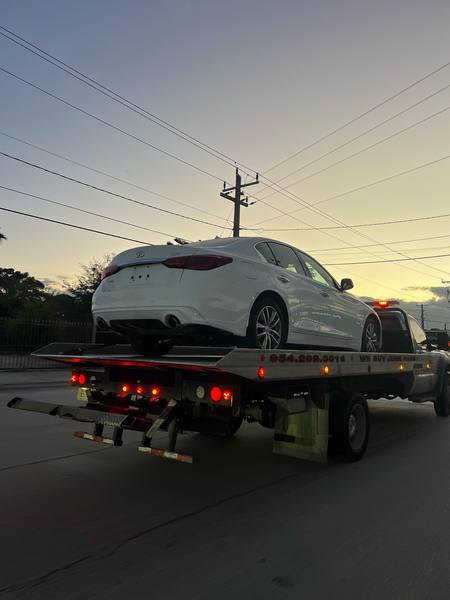
Family sedans and commuter cars follow the general calendar: strongest in spring, slowest in December. Older and high-mileage vehicles are the least seasonal of all, because their buyers shop on price and necessity rather than timing. If your car falls in that category, the season matters far less than the car's condition today versus its condition after three more months of sitting. For buyers weighing storm-season risks specifically, selling before hurricane season lays out the timing logic.
Waiting rarely pays unless a strong season is only weeks away. Cars depreciate while they sit, and they do it faster than most sellers expect: every month of waiting is a month of age, a month of mileage if you keep driving it, and a month for something to break. A car that needs nothing today can need tires, brakes, or a battery by the time your target month arrives, and each of those repairs comes straight out of the sale price or the offer.
There is one exception worth noting. If you are two or three weeks from a clearly stronger window, such as early February with refund season starting, waiting can make sense. But waiting from October to April on a hunch is not timing the market. It is storing a depreciating asset and hoping. Get a firm number now so you are deciding from facts: a phone quote for your running car takes minutes and gives you the baseline to judge any waiting strategy against.
When the next model year arrives, the previous model year typically steps down a notch in the value guides that buyers use. Your three-year-old car becomes, in pricing terms, last year's three-year-old car. The step is usually modest for mainstream vehicles and larger for models with a significant redesign, but it is real, and it is one more cost of waiting through the fall rollover.
This matters most for cars that are already near a value cliff: high-mileage vehicles approaching a psychological threshold, or models where the redesign is widely covered. For most sellers it is a secondary factor behind season and condition, but it belongs in the calculation. If your car is about to cross a model-year boundary and you are already thinking of selling, that is a nudge toward sooner. You can see what similar vehicles are bringing right now in recently purchased cars.
Treat timing as a tiebreaker, not a strategy. First, get a firm offer for the car as it sits today. Then ask whether any specific, near-term season would plausibly beat that number by more than the cost of waiting: depreciation, insurance, registration, and the risk of new problems. In most cases the answer is no, and selling now is the better financial move. When the answer is yes, you have a concrete plan with a date, not a vague hope.
Storm season adds one Florida-specific wrinkle: a car that floods during hurricane season can lose most of its value overnight, which no timing gain can offset. Our hurricane season flood guide covers that risk honestly. For most sellers, the smartest timing is straightforward: sell your used car fast when the car is in its best condition and the number is right. Instant Money Junk Cars serves Broward, Miami-Dade, and Palm Beach counties with same-day pickup and cash on the spot, and reviews from local sellers describe the process. One call to 954-787-5717 gets you the firm number that makes the timing decision easy.
FAQ
Call 954-787-5717 for a cash offer. Free towing, cash on the spot, pickup usually within about an hour.
954-787-5717
 954-787-5717