No title? No problem in most cases. Free towing, cash on the spot.
Published October 19, 2026 by Instant Money Junk Cars
Every June, hurricane season returns to Florida, and every June, marginal cars sitting in driveways across South Florida become liabilities. If you own an aging car you barely drive, the case to sell your old car before hurricane season in Florida is straightforward: sell in spring, convert a depreciating liability into cash, and skip the six months of storm risk entirely.
This is not about panic selling. It is about timing a decision you were probably going to make anyway. This guide covers why spring is the right window, what storm season does to an old car's value and your costs, and how the sale itself works when the car barely runs.
An old car in May is a car with a market value. The same car in September, after sitting through storm season, may be a flood-damaged car with a fraction of that value. Flood damage does not negotiate: a car that takes on water loses most of its worth instantly, and saltwater flooding in particular finishes cars decisively. Beyond the flood risk, there is the carrying cost. Six months of insurance, registration, and the slow deterioration of a car baking in the Florida sun add up against a vehicle you barely use. Insurance deserves its own line in the calculation: comprehensive coverage on a car you rarely drive is a meaningful annual expense, and dropping to liability-only to save money means storm damage becomes entirely your loss, which makes selling the more rational hedge. Some owners find that the insurance savings alone, over the years they would have kept the marginal car, exceed what the car would have fetched if they had waited. Selling in spring captures the car's value at its highest point in the year and eliminates half a year of ownership costs in one move. The best time to sell a car in Florida breaks down the seasonal patterns in more detail.
March through May is the window. Hurricane season officially starts June 1, and the spring months give you time to get quotes, choose a buyer, and schedule pickup without rushing. Demand is solid in spring: buyers are stocking inventory, tax-refund season puts money in circulation, and you are selling before the post-storm rush of damaged cars floods the market and softens prices for everything. Selling in April also means the car is gone before the first tropical outlook appears on the news and every marginal car in the county becomes a harder sell. If you are comparing this against waiting, recently purchased vehicles shows the range of cars moving through the market right now, which helps you judge where yours sits.
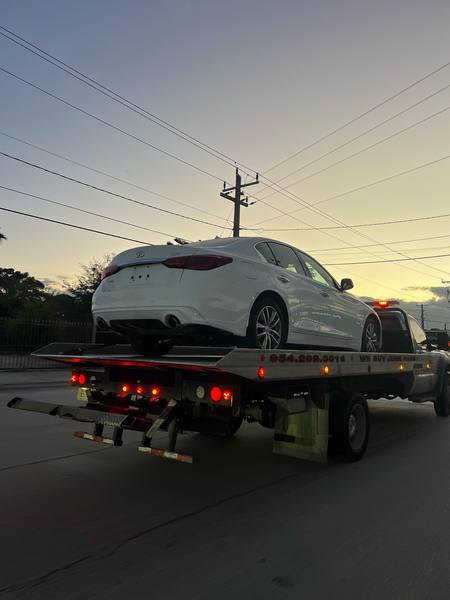
That is the normal case, not an obstacle. Buyers tow non-running cars every day, and you do not need to drive the car anywhere to sell it. A car that has been sitting for months, needs a jump, or has not started in a year is a routine pickup: the truck comes to you, the driver handles the loading, and the towing is free. Do not spend money getting a marginal car running just to sell it; the repair bill almost never returns itself in the sale price. Describe the car honestly when you request an online quote, including how long it has been sitting and what it does or does not do. The quote you receive already accounts for the condition, so there are no surprises at pickup. How pickup works walks through the collection process for non-running vehicles specifically.
Flood risk is the headline, but the case has three more legs. Insurance is one: carrying comprehensive coverage on a car you barely drive is expensive, and carrying liability only means storm damage is entirely your loss, which makes selling the rational hedge. Hassle is another: every storm warning means moving the car, protecting it, or worrying about it, which is a strange tax to pay on a vehicle you do not use. And depreciation is the quiet third: old cars lose value sitting still, and a car that sits through storm season emerges older, more weathered, and worth less even if it stays dry. Together, the four factors make spring the natural exit point. If you are on the fence, the claim-versus-selling framework is useful reading for what happens when owners wait too long, and the hurricane season flood guide shows what the downside looks like in detail.
The process is the same as any as-is sale, just scheduled earlier. Get two or three written quotes with an accurate description, confirm free towing and payment at pickup, choose the buyer with the firmest terms and the best reviews, and schedule the pickup. The whole thing can be done in a day. When you sell your car fast in April or May, you are not just getting cash; you are buying yourself a storm season with one fewer thing to worry about. That peace of mind, plus the money in hand before the first forecast cone appears, is the entire argument for selling early rather than hoping the season spares you.
FAQ
Call 954-787-5717 for a cash offer. Free towing, cash on the spot, pickup usually within about an hour.
954-787-5717
 954-787-5717