No title? No problem in most cases. Free towing, cash on the spot.
Published October 19, 2026 by Instant Money Junk Cars
If Carvana rejected your car, it does not mean the vehicle has no value. It means the car does not fit that platform's buying model, which is built for clean, late-model, retail-ready inventory. Plenty of rejected cars sell quickly to buyers with different criteria, often the same day.
This guide covers the most common rejection reasons, which ones you can fix and reapply for, and who buys the vehicles that online platforms turn away. There is no shared blacklist, and a rejection from one buyer has no effect on what another will pay.
Rejections fall into a few clear buckets. Title problems lead the list: a missing title, a title that does not match the seller, an undisclosed lien, or a branded title such as salvage or rebuilt that the platform does not purchase. Then come the hard cutoffs: vehicles past the platform's age or mileage limits are declined regardless of condition, because the buying model is not built to resell them. Condition rejections follow, typically for undisclosed frame damage, flood history, or mileage far above what was submitted.
Notice what is missing from that list: ordinary wear, high but plausible mileage, and cosmetic issues usually produce adjustments, not rejections. A rejection means something structural about the car or the paperwork falls outside what the platform handles. That distinction matters, because it tells you whether the problem is fixable or whether you simply need a different kind of buyer. Our overview of what online buyers inspect shows where the line between adjustment and rejection usually sits.
Sometimes. Paperwork problems are the most fixable category. A lien that has been paid off but never released can often be cleared with a lien release letter from the lender. A title with an error, such as a misspelled name, can usually be corrected through the Florida DHSMV. If the rejection came from something correctable, fixing it and reapplying is a reasonable path, and the second application is evaluated on its own.
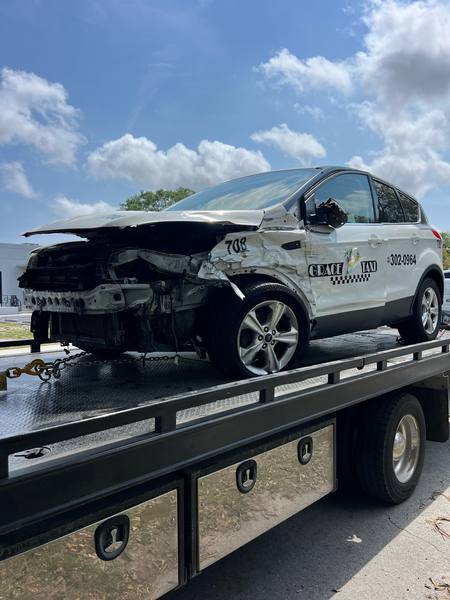
But age, mileage, and condition cutoffs are generally firm, and no amount of paperwork changes them. A fifteen-year-old car with 220,000 miles will not become platform-eligible because you detailed it. Be honest with yourself about which bucket your rejection falls into before spending money or time trying to reverse it. Flood history deserves special care here: saltwater versus freshwater flood damage explains why some flood cars are effectively done as retail vehicles no matter what you do.
No, and this is the misconception that costs sellers the most. A rejection measures fit with one purchasing model, not value. National platforms buy for retail resale, so they need clean titles, limited age and mileage, and condition they can certify. Vehicles outside those bounds still have real value in other channels: as wholesale inventory, as parts donors, or as transportation for buyers who do not need retail-ready. Different buyers, different math, different answer.
It also helps to know that offers vary widely by channel even for cars that are accepted everywhere. As this breakdown of why online offers vary explains, each buyer prices for its own resale path, so a rejection from one platform says nothing about the next quote. The only number that matters is the one a willing buyer puts in front of you.
Local cash buyers are built for exactly this inventory. They purchase cars in almost any condition, including non-running vehicles, damaged cars, older high-mileage vehicles, and cars with title complications that stop a national platform cold. The evaluation is simpler, the criteria are broader, and pickup is typically same-day rather than scheduled days out. For many rejected sellers, the local route is not a fallback. It is the channel the car belonged in from the start.
Dealers and auction buyers are other possibilities depending on the car, and a private sale can work for vehicles that are rejected on technicalities but still drive well. But when speed and simplicity matter, the local cash buyer is hard to beat.
The practical difference is what happens at the appointment. A national platform verifies your car against a narrow buying box, and anything outside it ends the deal. A local buyer evaluates the same car against a much wider set of resale paths, from auction to parts, which is why the conversation starts with what the car is rather than whether it qualifies. You describe the condition once, get a firm number, and the truck handles the rest.
Start with the rejection reason, if the platform gave you one. If it is paperwork, decide whether fixing it is worth the effort or whether selling as-is to a buyer who handles title complications is simpler. If it is a cutoff issue, skip the reapplication and go straight to buyers without those cutoffs. Either way, get your next quote from a buyer who actually purchases cars like yours, and describe the condition plainly so the number you get is the number you keep.
Instant Money Junk Cars serves Broward, Miami-Dade, and Palm Beach counties, runs 15 trucks, has purchased more than 10,000 cars, and pays cash on the spot with free towing for cars. If your vehicle runs, get a firm phone offer in minutes. If you want it gone today, sell your used car fast with same-day pickup. Compare the local route against the platforms in the online-buyer alternative guide, and read reviews from South Florida sellers. One call to 954-787-5717 gets you a firm offer with no appointment and no waiting.
FAQ
Call 954-787-5717 for a cash offer. Free towing, cash on the spot, pickup usually within about an hour.
954-787-5717
 954-787-5717