No title? No problem in most cases. Free towing, cash on the spot.
Published October 19, 2026 by Instant Money Junk Cars
Comparing Copart fees vs selling outright starts with one habit: model the net, not the hammer price. Copart auctions look simple until the fee schedule arrives, and by the time listing fees, gate fees, buyer premiums, and towing have all taken their share, the number you imagined and the number you receive can be far apart. A direct sale has no fee schedule at all, which makes the comparison straightforward once you know what to count.
This guide breaks down what Copart actually costs sellers, who pays for towing, how long payment takes, and the honest cases where an auction still makes sense. If your car is an ordinary vehicle rather than a specialty one, a direct cash sale is usually simpler, faster, and closer in net than sellers expect.
Sellers commonly face listing fees for entering the vehicle, gate fees for processing it through the yard, and a share of buyer premiums depending on the sale type. Additional services such as enhanced listings, title processing, and storage beyond the included window can add further line items. The exact schedule varies and changes over time, so the current fee table is the only authoritative source, and it is worth reading in full before you consign anything.
The important thing to understand is that these fees stack. No single charge looks dramatic on its own, but a listing fee plus a gate fee plus a premium share plus towing can take a meaningful bite out of the final price, particularly on lower-value vehicles where the fees represent a larger percentage. Always build your estimate from the fee table, not from the sale prices you see advertised. For a fuller comparison of the two paths, see our junk car sale vs Copart breakdown.
Usually the seller, either paid directly to a tow company or deducted from the auction proceeds. If your car does not run, this is not a trivial line item. A non-running vehicle needs a flatbed or a winch-out, and the cost comes out of your pocket before the bidding even starts. Factor the tow into your math from the beginning rather than discovering it in the settlement statement.
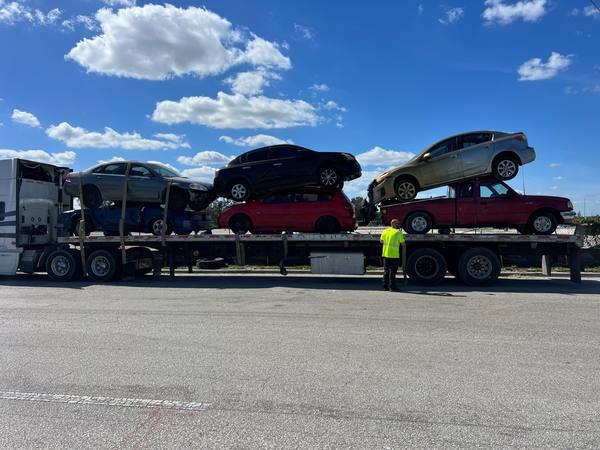
This is one of the clearest contrasts with a direct sale. Buyers who buy cars in any condition tow free as part of the purchase, and totaled-car buyers handle non-runners the same way. When you compare the auction route against a direct offer, add the tow cost to the auction side of the ledger. It belongs there.
Weeks, not days. The timeline runs from listing to auction date, then through settlement processing after the hammer falls. If your car misses a sale or fails to meet reserve, the cycle repeats. During all of it, you are still paying insurance on a car you no longer control, and the vehicle is depreciating in a yard instead of sitting in your driveway.
Direct buyers pay at pickup, which is the structural difference between the two paths. An auction optimizes for the highest possible price at an uncertain date. A direct sale optimizes for a firm price today. Sellers who need funds this week, or who are paying to insure a car they cannot drive, usually find the certainty worth more than the possibility of a higher hammer price. Our guide to questions to ask any junk buyer will help you vet the direct-sale side just as carefully.
That depends on the sale price, the fee schedule in effect, and how much you spent on towing and preparation, so there is no single answer. The discipline that matters is doing the subtraction before you commit: take a realistic hammer price for your specific car, subtract every fee on the current schedule, subtract towing, and subtract the insurance you will pay while you wait. What remains is your true net, and it is the only number worth comparing against a direct offer.
Many sellers are surprised by how narrow the gap becomes. An auction that hammers at a strong price can still net near a direct cash offer once the fees and the waiting costs come out, and the direct offer arrives weeks sooner with zero uncertainty. If you want a second data point on the true cost of the slow path, read the truth about junk removal costs. Then get the direct number and compare honestly.
For rare or specialty vehicles where competitive bidding might genuinely exceed any single buyer's offer. Classic cars, unusual trims, and vehicles with a dedicated enthusiast following can benefit from an audience of motivated bidders in a way that ordinary cars cannot. If your car has a real collector market, the auction format earns its fees.
For ordinary cars, the auction is usually the longer, costlier road to a similar number. A ten-year-old sedan with high miles is not going to start a bidding war. It is going to sell near wholesale, minus fees, weeks from now. In that situation the rational move is a direct sale: firm offer, free towing, cash on the spot. Check what other sellers say about the direct path, and if your car is wrecked rather than merely old, our totaled car guide covers whether to keep it or sell it. Call 954-787-5717 for a number you can compare against your auction math today.
FAQ
Call 954-787-5717 for a cash offer. Free towing, cash on the spot, pickup usually within about an hour.
954-787-5717
 954-787-5717