No title? No problem in most cases. Free towing, cash on the spot.
Published October 19, 2026 by Instant Money Junk Cars
Yes, you can sell a car with expired registration in Florida. Registration is about the legal right to drive on public roads, not the right to sell the car. An expired tag does not block the title transfer.
This guide covers what expired registration actually affects, whether renewing is worth it, what happens to your plate at the sale, and the cheapest path to a clean transfer. In most cases, the answer is simpler than sellers expect.
No. The title transfer is about ownership, and registration is about permission to operate the vehicle. The state processes title transfers on cars with lapsed registration routinely; the buyer simply cannot legally drive the car on public roads until it is registered in their name with valid insurance. Since most buyers in this lane trailer or tow the car away, that limitation rarely matters.
The confusion comes from the fact that both involve the tax collector's office, but they are separate transactions. Do not let an expired sticker talk you out of selling, and do not pay to renew a registration on a car you are about to sell unless you have a specific reason. How you get paid when you sell a car explains the sale mechanics independent of registration status.
In most cases, no, and renewing is usually wasted money. The buyer will register the car in their own name anyway, which means your renewal would be replaced within days. The exception is narrow: if you plan to keep driving the car while you shop for buyers over several weeks, staying legal on the road matters. But if the sale is days away, the renewal fee buys you nothing.
One related question is whether the expired registration affects the offer. It does not, in our experience; buyers price the car, not the sticker. What does matter is the car's condition and your paperwork. If you are also wondering about insurance on a car you barely drive anymore, our article on selling a car without insurance covers that side of the equation.
In Florida, the plate belongs to you, not the car. When you sell, you remove the plate and either transfer it to a replacement vehicle or surrender it to the state. Do not leave your plate on the car for the buyer; any tolls, tickets, or violations tied to that plate trace back to you until the state processes the change.
You should also file the state's notice of sale after the transaction. That filing removes the registration from your name and protects you if the buyer delays registering the car or drives it before doing so. It is a short form filed with a motor vehicle service center, and it is the single most overlooked step in a Florida car sale. If you are not replacing the vehicle, surrendering the plate at a tax collector's office closes the loop cleanly.
Keep insurance in force until the sale is complete and the plate is surrendered or transferred. Canceling insurance while the plate is still active can trigger a license suspension in Florida, which is a headache far out of proportion to the premium you would save over a few days. The order of operations matters: sell first, then handle the plate, then cancel the policy.
After the sale, call your insurer to cancel and ask about a refund of the unused premium. Most policies refund the remaining term, which puts a little money back in your pocket. Keep the cancellation confirmation with your sale paperwork.
Skip the renewal, sell the car as it sits, remove your plate at pickup, file the notice of sale, and cancel the insurance. That sequence costs you nothing beyond the normal sale and leaves no loose ends. A direct buyer who picks up the same day makes it even simpler, since there is no gap where the car sits unregistered in your name.
If a registration refund is on your mind, the rules are narrow, but our article on Florida registration refunds lays out what is actually recoverable. And if you want the whole thing handled in one visit, selling without an appointment explains how same-day pickups work.
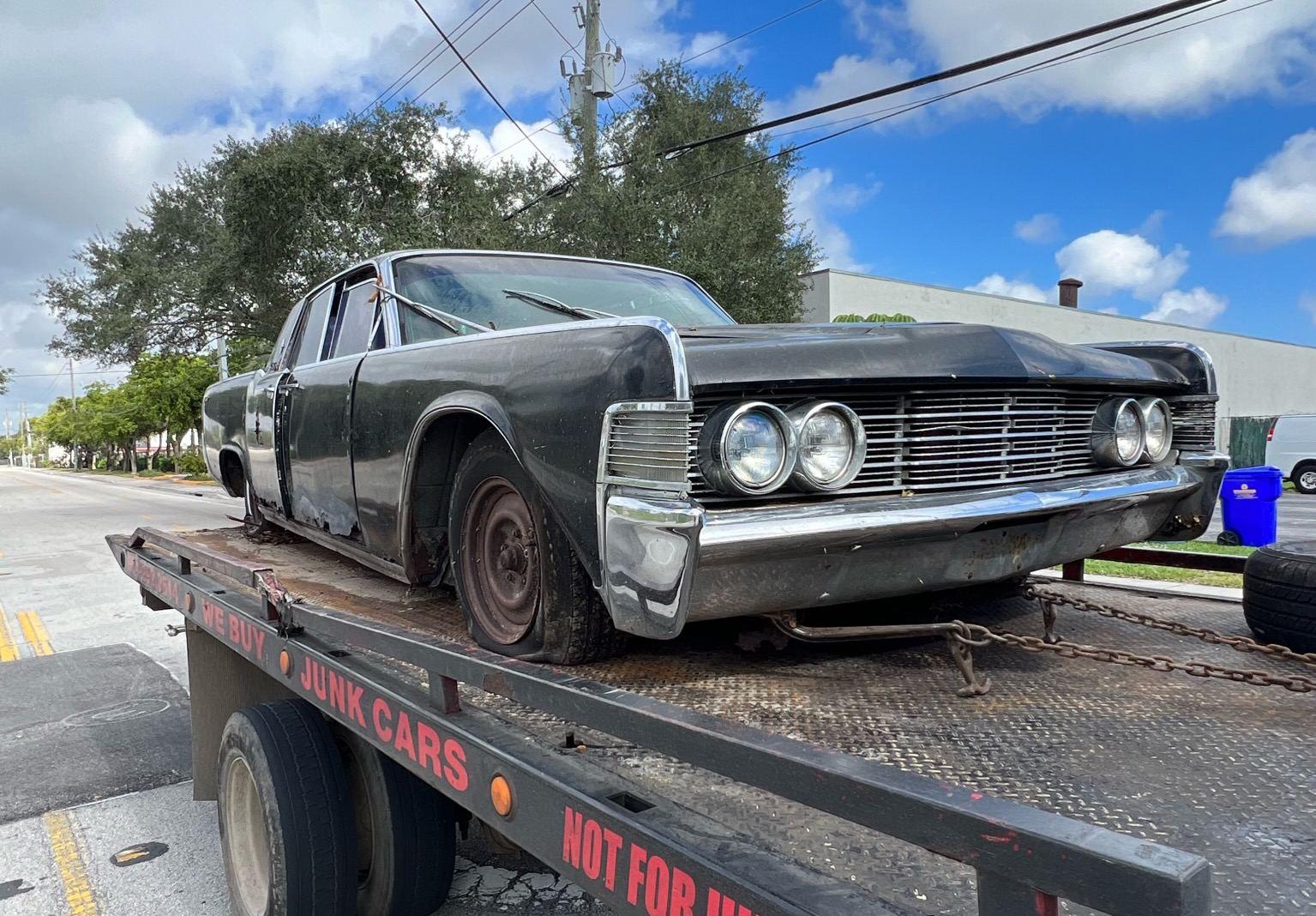
A buyer cannot legally drive on public roads with expired registration, which is why most sales of lapsed-registration cars end with the car being towed or trailered away. Professional buyers handle this as a matter of routine: the tow truck loads the car at pickup and the registration question never arises. If you are selling privately, agree in advance on how the buyer will transport the car.
Do not let the buyer drive it away on your plate as a favor. Your plate stays with you, and any violation tied to it is your problem until the state processes the transfer. The clean handoff is simple: you keep your plate, the buyer arranges transport, and the bill of sale documents the as-is transfer.
A lost title plus expired registration is still solvable. You can apply for a duplicate title through the county tax collector's office, which typically requires your ID and a small fee. Some buyers can also work with alternative documentation depending on the car's age and value, so it is worth asking before you assume the sale is stuck.
Handle the duplicate title first, then proceed with the normal sale sequence. Two missing pieces of paperwork feel overwhelming together, but each one has a straightforward fix, and neither one prevents the sale once addressed.
FAQ
Call 954-787-5717 for a cash offer. Expired registration does not stop the sale, and pickup is free.
954-787-5717
 954-787-5717