No title? No problem in most cases. Free towing, cash on the spot.
Published October 19, 2026 by Instant Money Junk Cars
An aging Ford F-150 still holds real value with a cash buyer, because buyers separate normal work-truck wear from the specific failures that genuinely cost money. High miles, faded paint, and a worn interior are priced in as expected on a truck that worked for a living. What lowers an offer is drivetrain trouble, structural rust, and missing components, and this guide explains which is which so you know where your truck stands before you call.
The F-150 is the highest-volume vehicle in the country, which means cash buyers have seen every version of it, from clean Florida trucks with 250,000 miles to Triton-era trucks with seized engines. That familiarity is good for sellers: the valuation is based on the truck's actual condition, not on guesswork. If you are comparing buyers, our breakdown of how junk car offers are calculated shows the same framework every offer follows.
Cosmetic wear is the easiest category. Sun-faded paint, a cracked dashboard from Florida heat, worn seat bolsters, and dings in the bed are expected on a truck with six figures on the odometer, and none of them move an offer much. Buyers expect a work truck to look like a work truck. Mileage alone is similar: buyers anticipate high miles on an F-150, and a truck that has been maintained will still be valued as a running vehicle well past 200,000 miles.
Completeness matters more than cosmetics. An F-150 with its original engine and transmission, all four wheels, an intact bed and tailgate, and a complete interior is worth more than a prettier truck that is missing parts. Buyers price what they can resell or reuse, so a truck that is all there holds together as an offer. Accident history is the other priced-in factor: a clean Florida truck without reported crashes compares better than one with a record, which is why accident history affects the offer the way it does.
The Triton-era 5.4L V8 has two commonly reported issues that buyers know by heart. Spark plugs on these engines are widely reported to seize and break during removal, which turns a routine tune-up into a labor-intensive job, and cam phaser wear produces the ticking noise owners notice at idle. Neither is a certainty for your specific truck, but buyers treat them as known patterns and price the expected labor into the offer. Disclosing a phaser tick or a known plug issue upfront keeps the offer firm, because the buyer is pricing the truck you described, not a mystery.
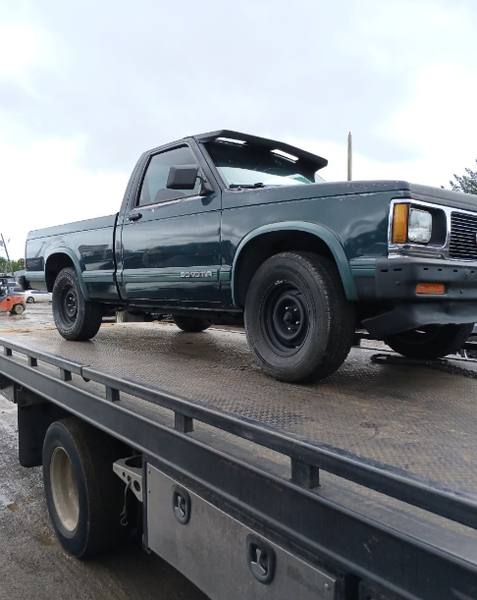
A seized or blown Triton engine is the bigger deduction, but it does not reduce the truck to scrap metal. A clean, rust-free Florida truck with a dead 5.4L still carries value in its transmission, axles, bed, cab, and interior. The offer reflects a parts-and-platform valuation rather than a driver valuation, which is still real money for a complete truck. If your engine is simply running rough, get the fault described accurately when you request the offer: a misfire from a coil is priced very differently from a knock that suggests internal damage.
Broken exhaust manifold studs are commonly reported on older Triton engines, and the symptom is distinctive: a ticking or tapping sound on cold start that quiets as the engine warms. Buyers note it as a defect, but it is rarely a dealbreaker on its own. The expected repair is a known quantity, so it gets priced in as a line item rather than treated as a reason to walk away.
What pairs with manifold issues more often than owners expect is heat. Trucks that run hot or have chronic cooling-system neglect get priced with cooling-system risk, since overheating is what turns a small problem into an engine problem. Our guide to whether an overheating car should be sold or fixed walks through that repair math in detail, and the same logic applies to trucks.
Rear differential wear shows up as a whine or howl on the test drive, and on 4x4 trucks the transfer case and front actuators get evaluated too. These are the kinds of defects a buyer hears within the first minute of a drive, so they are priced conservatively: the buyer assumes the worst reasonable version of the repair, not the best. A truck that shifts cleanly and tracks straight in four-wheel drive earns a better number than one with drivetrain noises, even at identical mileage.
Four-wheel-drive components in working order do add value, but they do not offset a failed transmission or a seized engine. Each system is evaluated on its own, which is the fairest way to think about your truck: list every system honestly, and the offer lands where the truck's actual condition puts it. Selling a junk Ford F-150 follows this exact condition walkthrough, system by system.
The rule is simple: add up the repair estimates, and compare the total against the truck's working value plus the as-is offer. One repair, like a manifold stud job, can be worth doing on an otherwise strong truck. But a stack of repairs, phasers plus rear-end work plus a tired transmission, almost always exceeds what the truck would sell for afterward. Why junk car offers vary between buyers often comes down to how honestly the repair stack was estimated before the call.
The as-is lane exists for exactly this situation. You describe the truck once, get a firm number, and the sale closes in a single visit with cash in hand and the truck towed away free. No shop estimates, no weeks of downtime, no repair that costs more than it returns. Call 954-787-5717 with the year, mileage, and an honest description of what the truck does and does not do, and you will have a firm offer within minutes.
FAQ
Call 954-787-5717 for a cash offer. Free towing, cash on the spot, pickup usually within about an hour.
954-787-5717
 954-787-5717