No title? No problem in most cases. Free towing, cash on the spot.
Published October 19, 2026 by Instant Money Junk Cars
The restoration stalled years ago, the garage is full, and the boxes of parts have become furniture. If you are ready to sell an unfinished project car, the good news is that a half-finished build is worth more than you probably think: the parts, the shell, and the drivetrain all have value to the right buyer, even if the project never turns a wheel under your ownership.
This guide covers how to value a work-in-progress honestly, why finishing it first is usually the wrong move, how to present the parts collection, and who buys these cars. The emotional part is yours to handle. The financial part is straightforward once sentiment is set aside.
Yes, often more than the owner expects. A project car has three value layers: the parts already installed or waiting in boxes, the shell and drivetrain as a foundation for someone else's build, and the scrap floor underneath it all. New or rebuilt components, a straight body, a solid frame, and a known-good engine or transmission are worth real money to the right buyer. Even a disassembled project has value in its parts alone. The mistake owners make is pricing the car at what they spent; the market prices it at what the parts and shell are worth to the next person, discounted for the labor risk of an unknown assembly state. Browsing recently purchased vehicles gives you a sense of how as-is cars are actually valued, without sentiment in the number.
Almost never. The remaining work usually costs more than it adds to the sale price, because your labor rate on the open market is far higher than the value a buyer assigns to a completed amateur build. There is also the risk factor: every additional month of "almost done" is a month the car sits, parts age, and your enthusiasm fades further, while the garage stays occupied. The rare exception is a project that is genuinely one weekend from completion with all parts on hand, and even then the math deserves a skeptical look. Sell the car as the honest work-in-progress it is. If you want the market's view on what modifications add, how modifications affect a car's value is a useful reality check before you invest another dollar.
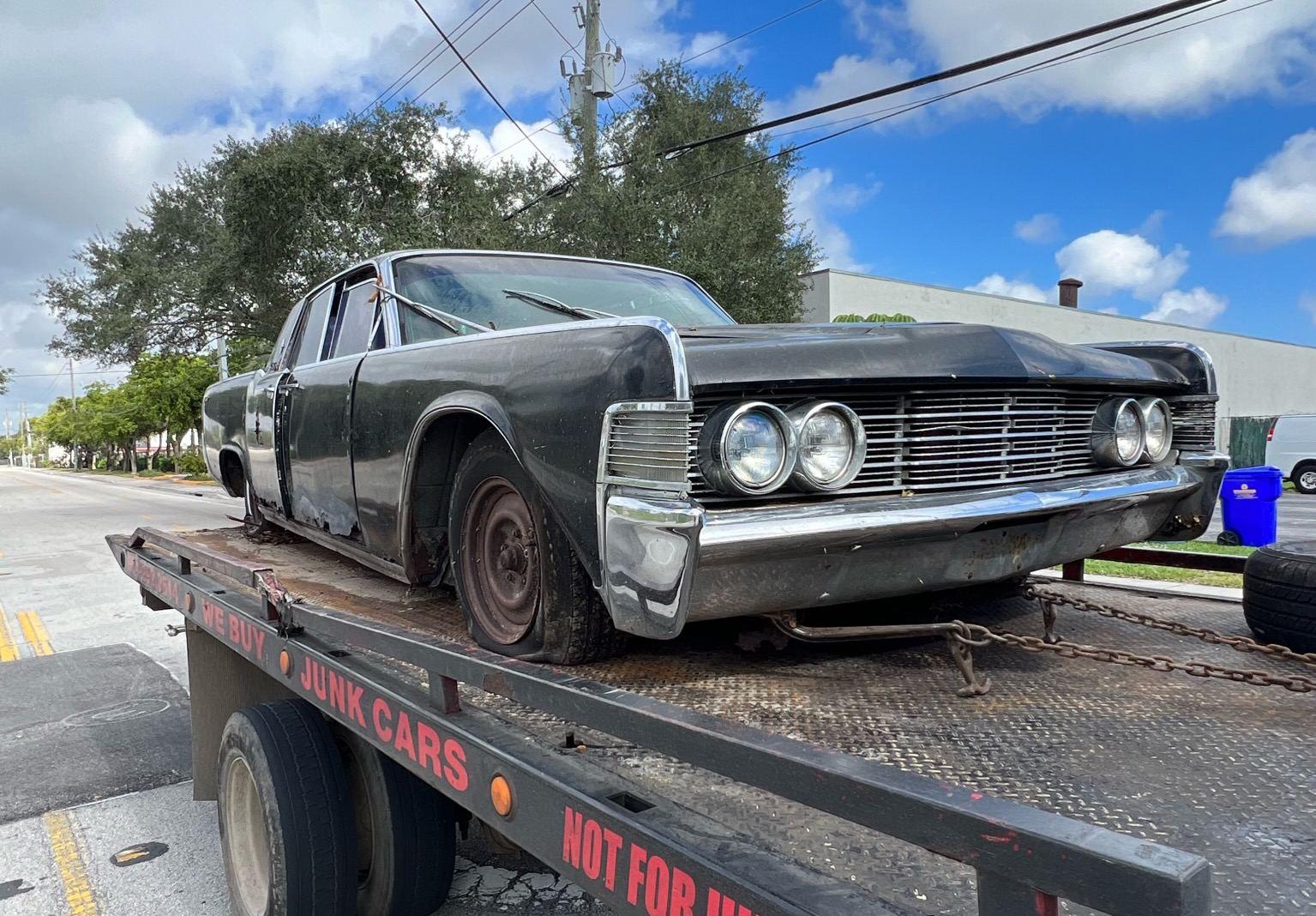
Inventory everything. Organized parts with receipts meaningfully raise what buyers will pay, because they convert an unknown pile into a known quantity. List the major components, note which are new versus used, and gather any receipts or documentation for the significant purchases. Photograph the parts alongside the car so the buyer sees the complete package. Include the boxes with the sale; selling the parts separately is slow, and the buyer pricing the project as a whole will pay for the convenience of getting everything at once. When you request an online quote, describe the project state accurately: what is installed, what is in boxes, what runs, and what does not. An accurate description gets you a firm number; a vague one gets you a renegotiation at pickup. For the mechanics of an as-is transaction, selling a car as-is, explained covers what the term means in practice.
Two markets exist, with a clear tradeoff. Other enthusiasts pay the most, because they value the parts and the vision, but the sale takes time: listings, questions, tire-kickers, and no-shows are the price of the premium. If you go the enthusiast route, price the project from the buyer's perspective, photograph the parts collection as carefully as the car, and be upfront about what is missing; enthusiasts respect an honest project listing and punish a vague one. Cash buyers take project cars as-is immediately, with free towing and payment at pickup, when you want it gone this week rather than this season. The right choice depends on your timeline and your tolerance for the selling process. If the project has been sitting for years, be honest about whether you will actually run an enthusiast sale or whether the listing will just become another stalled project. Why offers vary between buyers explains the pricing logic on the cash-buyer side, which helps you evaluate both paths fairly.
Add up the realistic parts value and the shell's worth as a foundation, then discount for the buyer's labor risk and the unknowns of a disassembled car. Get comparable data where you can: what do running examples of the model sell for, what do parts cars bring, and what would the components fetch individually. Then subtract the buyer's effort to sort, verify, and assemble. Sentimental value and total receipts do not enter the equation; the buyer is purchasing metal and parts, not your weekends. Price it fairly and it sells quickly. Price it at cost-plus-sentiment and it sits, which is how it became a project car in the first place. A fair price also attracts serious buyers faster, which matters because every additional month of listing is another month the parts age and your motivation fades. When the number is set, how pickup works shows the collection process, and selling your car fast clears the garage in a single visit.
FAQ
Call 954-787-5717 for a cash offer. Free towing, cash on the spot, pickup usually within about an hour.
954-787-5717
 954-787-5717