No title? No problem in most cases. Free towing, cash on the spot.
Published October 19, 2026 by Instant Money Junk Cars
The engine is gone, the wheels are gone, or the catalytic converter was cut off years ago, and you are wondering whether anyone will still buy the car. The answer to whether you can sell a junk car with missing parts is yes in nearly every case: buyers purchase incomplete vehicles routinely, and missing components change the price, not the possibility.
This guide walks through which missing parts matter and which do not, what the car still needs to have, how the offer is affected, and the one question every owner of a stripped car asks: should you part it out yourself first.
Yes. Buyers purchase engineless cars regularly, and the offer simply reflects scrap weight plus the value of the remaining parts. The engine is the single most valuable component, so its absence moves the number more than anything else, but the transmission, body panels, interior, electronics, and the steel shell all retain value independently. An engineless car with a straight body and complete interior can still command a respectable offer, since those remaining parts have ready buyers. Describe the car accurately when you get an online quote: no engine, and note what else is missing or present. An accurate description gets you a firm number; discovering the missing engine at pickup gets you a renegotiation. For the general logic of how incomplete cars are priced, how junk car offers are calculated breaks down the parts-versus-scrap math.
Missing wheels and tires are a non-issue for the sale. The tow truck brings dollies or a flatbed, so the car does not need to roll; cars with flat tires or missing wheels are a routine pickup. A missing catalytic converter reduces the offer somewhat, since converters carry precious-metal value that buyers price separately, but it does not prevent the sale. Selling a car with a bad catalytic converter covers the converter question in detail, including why its value matters to buyers. The pattern is consistent: each missing part adjusts the price by its value, and the car remains sellable as long as the core vehicle is there.
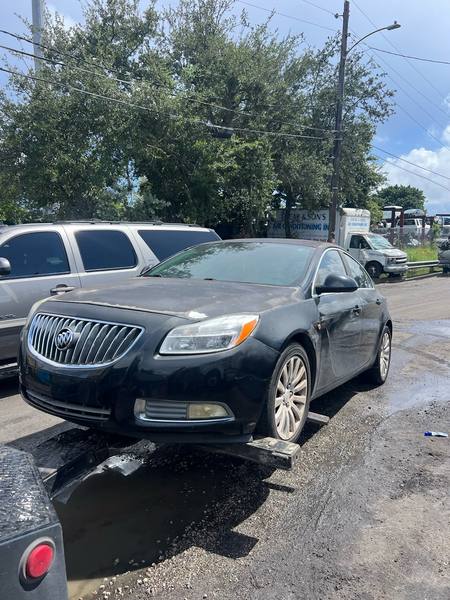
Essentially a recognizable vehicle with a VIN. Beyond that baseline, condition moves the price rather than the possibility. The VIN plate matters because it establishes what the vehicle is; the title matters because it establishes your right to sell it. Everything else is a pricing variable. A shell with no drivetrain, no interior, and no wheels is still a few thousand pounds of steel with a VIN, and steel has a market. Even a burned or heavily stripped shell usually qualifies, since the buyer is pricing material and whatever components survived. The practical test is simple: if a stranger could look at it and identify it as a car, it is sellable. Buyers who purchase cars in any condition mean it literally, and recently purchased vehicles shows the range of conditions that move through a real operation. If the car is so far gone that you are unsure it counts as a vehicle, call and describe it; the buyer will tell you plainly.
Usually not. Buyers price the car as presented, and parting it out yourself is slow, dirty, physical work with an uncertain return. The parts you think are valuable may take weeks to sell individually, the buyers may not appear, and the carcass you are left with is worth less and harder to move. There are narrow exceptions: a nearly new set of tires you can use on another car, or a specialty component with a known buyer already lined up. But as a general strategy, stripping a car you intend to sell whole destroys more value in your time than it creates in parts revenue. Consider the full picture: each removed part lowers the as-presented offer, adds hours of labor, and leaves you storing and listing components with no guaranteed buyer. Get the quote for the car as it sits, and let the buyer's dismantling operation do what it is set up to do. What happens to a junk car after you sell it explains where the parts actually go, which usually settles the question.
Inventory the car before you call. List what is missing, what is present, and what is damaged, in plain terms: no engine, no transmission, missing two wheels, interior complete, body straight. Photograph the car from several angles so the buyer sees the reality. Then get two or three written quotes with that same description across all of them. The quotes will cluster around the car's real value as presented, and the cluster is your market. Mention anything the car still has that is valuable, such as an intact transmission or straight body panels, because those items lift the offer above the scrap floor even on a heavily stripped vehicle. When the terms are right, how pickup works shows the collection process for incomplete vehicles, and selling your car fast gets even the most stripped-down shell off your property with free towing and payment at pickup.
FAQ
Call 954-787-5717 for a cash offer. Free towing, cash on the spot, pickup usually within about an hour.
954-787-5717
 954-787-5717