No title? No problem in most cases. Free towing, cash on the spot.
Published October 19, 2026 by Instant Money Junk Cars
Yes, a running car with a rebuilt title sells well. The rebuilt brand lowers the offer compared to a clean title, but a car that runs and drives always has buyers, and the as-is lane is built for exactly this situation.
This guide explains what the rebuilt brand means, how it affects offers, what Florida expects you to disclose, and who buys these cars. If your car runs, the brand is a pricing factor, not a dead end.
A rebuilt title means the car was once declared a total loss, then repaired, inspected, and returned to roadworthy status. The brand stays on the title permanently as a record of that history. It tells future buyers the car had a significant damage event in its past, even though it passed the state's inspection to be rebuilt and re-registered.
The brand is not a judgment on the current condition. Plenty of rebuilt cars were repaired properly and drive reliably for years. But the market prices the history, not just the present condition, which is why the brand affects the offer. Understanding how accidents on a vehicle history report affect offers gives you the broader context for how the market treats damage history.
It depends on the car, but the brand typically discounts the car against comparable clean-title vehicles because the buyer pool is smaller and resale is harder. A running rebuilt car still commands real money, especially when it runs well and the repair quality is evident. The discount reflects market reality, not a penalty, and a straightforward buyer will price it as a known factor rather than a mystery.
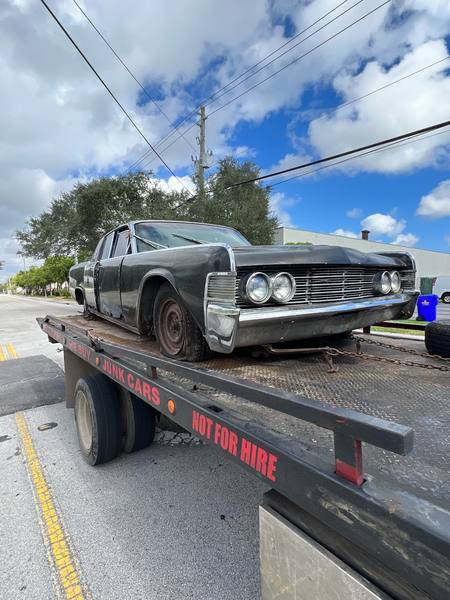
What helps your offer is everything that proves the car is solid now: maintenance records, the story of the repair, and a car that starts, drives, and stops properly at inspection. What hurts is trying to hide the brand. It is printed on the title, it shows on history reports, and a buyer who discovers it will assume the worst about what else was hidden. Our explainer on selling as-is, explained covers why honest disclosure produces firmer offers.
Disclose the rebuilt brand plainly and in writing, along with anything you know about the original damage and the repair. Florida expects honest disclosure in vehicle sales, and concealing a title brand can expose you to fraud claims that dwarf whatever the discount would have been. The brand is discoverable in seconds; hiding it has no upside.
Good disclosure also includes the odometer reading with the proper disclosure statement, since mileage accuracy is a separate legal requirement in every sale. Our guide to odometer disclosure when selling covers that piece, and disclosing damage legally walks through the broader obligations.
The retail market is thin for rebuilt cars because banks are cautious about financing them and many private buyers shy away from the brand. That is why the as-is and cash-buyer lane is the natural home for these sales: the buyer already prices branded titles professionally, closes quickly, and does not need the car to qualify for retail financing. A running rebuilt car is a straightforward purchase for this kind of buyer.
Be wary of anyone who asks you to hide or minimize the brand. Title washing, moving a branded car through another state to clean the title, is illegal, and our article on title washing in Florida explains why that path ends badly. Sell it honestly as the rebuilt runner it is.
The same paperwork as any Florida sale: the rebuilt title signed over to the buyer, your photo ID, a bill of sale noting the rebuilt brand, and the odometer disclosure. Remove your license plate at pickup and file the state's notice of sale so the registration comes out of your name. If there is a lien on the car, the payoff and release follow the normal financed-sale routine.
With the paperwork in order and the brand disclosed upfront, the sale closes like any other. The brand was priced in from the first phone call, so there is nothing to renegotiate at pickup.
It can. Some insurers are cautious about rebuilt-title cars, particularly for full coverage, because the prior total loss complicates valuation if the car is damaged again. Liability coverage is generally easier to obtain than comprehensive and collision. If you are keeping the car for now, call your insurer before you assume the current policy terms carry over unchanged.
For sellers, the insurance question is mostly about timing: keep coverage in force until the sale closes and the plate is handled, then cancel and request the unused premium back. The rebuilt brand does not change that sequence. And if insurance costs are part of why you are selling, that is one more honest factor in favor of a clean, fast sale.
For a rebuilt-title car headed to the as-is market, major repairs rarely pay back. The buyer prices the car with its history regardless, so spending on paint or upgrades ahead of the sale usually does not move the offer enough to cover the cost. Focus instead on the basics that help any inspection: the car starts reliably, the fluids are topped off, and it is reasonably clean.
What does pay back is documentation. Service records, receipts from the rebuild, and an honest written account of the car's history all support the offer. A well-documented rebuilt car with nothing to hide consistently outperforms a mysterious one.
FAQ
Call 954-787-5717 for a cash offer on your rebuilt-title car. A runner with honest paperwork sells fast.
954-787-5717
 954-787-5717